
AI for Competitive Analysis: Why Small Teams Win
Small teams spend 15-20 hours per week on manual competitor tracking with a 25% error rate. AI competitive analysis cuts that to 2 hours and under 5% errors. Here's how teams under 10 people set up automated CI that actually moves the needle.
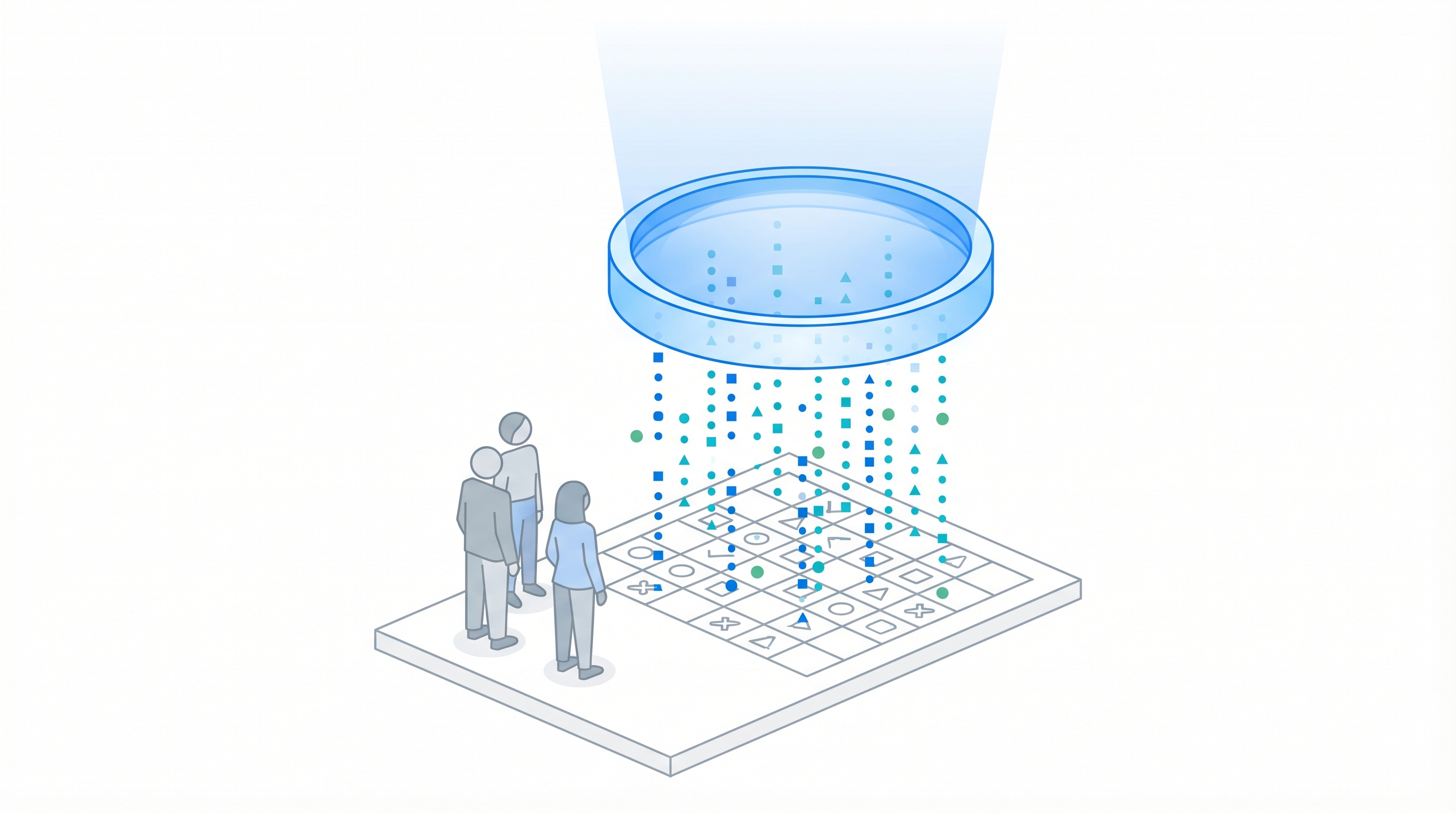
For small teams tracking competitors manually, the math is brutal. Research consistently shows that teams spend 15 to 20 hours per week on manual competitor tracking, and that AI automation can cut that figure down to roughly 2 hours. But most teams under 10 people cannot afford a dedicated analyst, and the information gap widens every quarter.
This is the tension every small team faces. Large companies staff entire departments for competitive intelligence. You have a founder toggling between Slack, a half-updated spreadsheet, and whatever a colleague remembered from a competitor's website last week. The information gap is real, but the budget gap is just as real.
Here is what makes 2026 different: AI CI tools now cost roughly 60% less than a full-time analyst. That is approximately $5K per month versus a $150K annual salary. This post covers how teams under 10 people can set up automated competitive intelligence that actually moves the needle, without burning budget or bandwidth.
What Manual Competitive Intelligence Actually Costs Small Teams
The time tax is worse than most founders realize. Small teams typically spend 15 to 20 hours per week on manual competitor tracking, scanning websites, social feeds, pricing pages, and product updates. AI automation can cut that figure dramatically, often from 20 hours down to 2.
The accuracy problem is just as bad. Manual CI carries a significant error rate, with industry estimates suggesting roughly one in four insights gathered by hand is either wrong, outdated, or incomplete. Think about that next time you screenshot a competitor's pricing page on Monday. If they change it Tuesday, you are selling against stale data by Thursday.
Every hour you spend copying competitor data into a spreadsheet is an hour you are not shipping product or talking to customers. For a 5-person startup, 15 hours per week of CI work is the equivalent of nearly half a full-time employee, but spread across people who should be doing something else entirely.
Klue's research has shown that manual CI fails roughly 30% of the time because data lives in silos. One person tracks pricing. Another watches social media. Nobody connects the dots until a deal is already lost.
How AI Changes the Math for Small Teams
The core shift is simple: AI monitors continuously, not when someone remembers to check. Instead of a weekly competitor review that is outdated before the meeting ends, you get real-time alerts on pricing changes, product launches, and messaging shifts.
The numbers back this up. Startups using AI CI automation consistently report faster market response times compared to manual processes. Speed matters because competitive intelligence has a shelf life. A pricing insight from three days ago is not intelligence, it is trivia.
Three Capabilities That Matter Most
For small teams, not every AI CI feature is equally useful. Focus on these three:
- Automated website change detection. The tool watches competitor pages and flags when something changes. No manual checking required.
- AI-classified alerts by importance. Not every change matters. AI scores updates by type and urgency so you only see what deserves your attention.
- Battle card generation from live data. Your sales team gets up-to-date competitive positioning without anyone manually updating a document.
The difference from enterprise tools is important. Those platforms assume you have a dedicated CI analyst configuring dashboards and building reports. Small teams need opinionated defaults that work out of the box, not configuration menus that take weeks to set up.
The 5-Minute Setup: Getting AI CI Running Without a Data Team
You do not need a data team or a technical co-founder to start tracking competitors with AI. Here is a realistic workflow for a non-technical founder:
- Pick 2-3 competitors. Start with your closest competitors, the ones your prospects mention in sales calls.
- Set monitoring pages. Add their pricing page, main product page, and blog. These three cover the most actionable signals.
- Configure alerts. Choose where you want notifications: email, Slack, or in-app. Set importance thresholds so you are not pinged about footer text changes.
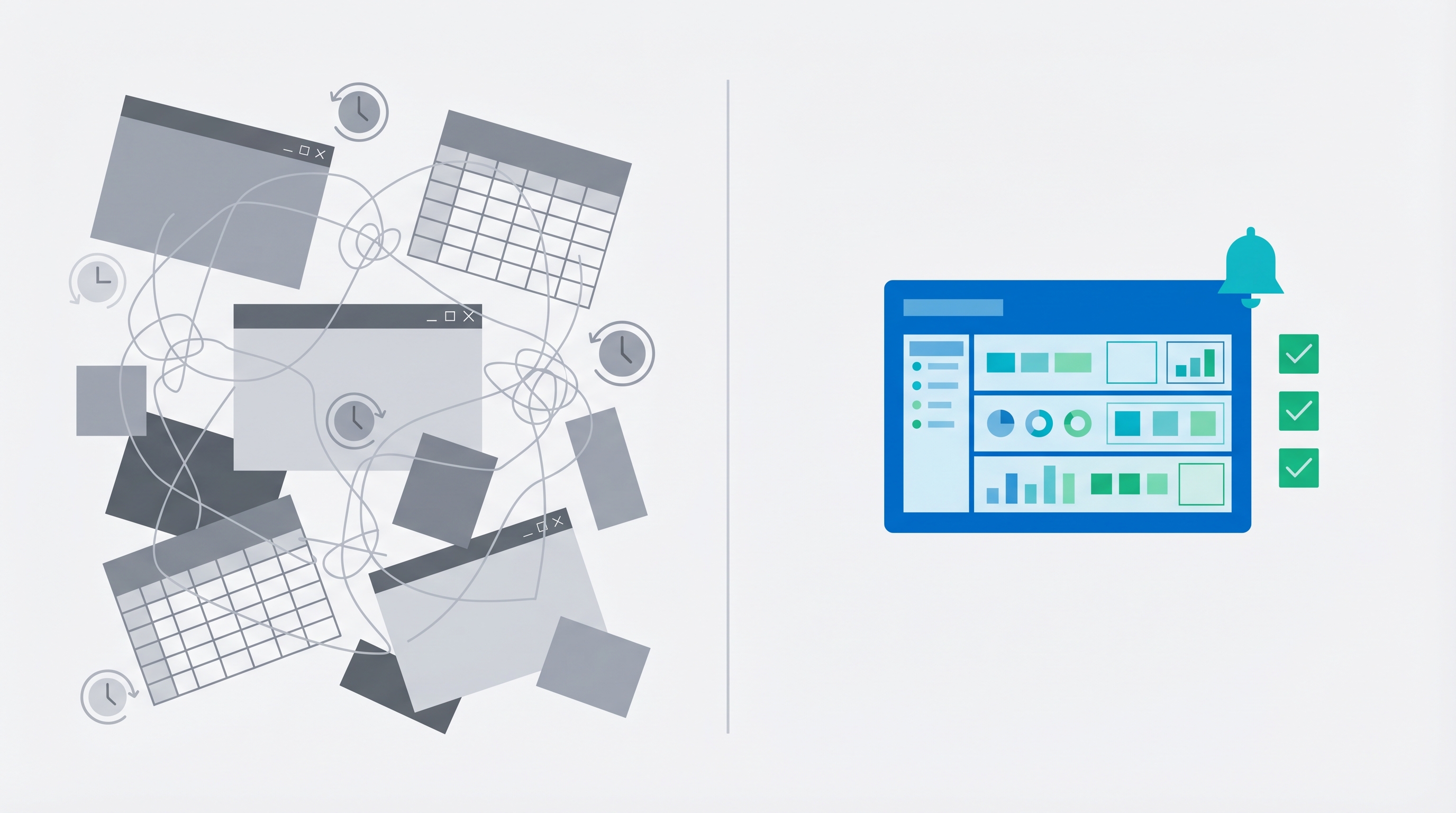
The no-code angle matters here. Small businesses adopting no-code AI integrations consistently report positive ROI within 3 months. You do not need custom API integrations or engineering time.
What to Monitor First
If you are starting from scratch, prioritize in this order:
- Pricing pages - the highest-signal, most actionable competitor change
- Feature and product pages - reveals roadmap direction and positioning shifts
- Blog and content output - shows where competitors are investing in SEO and thought leadership
- Job postings - hiring signals reveal strategic bets before they ship
The Hybrid Approach
One common mistake: over-relying on AI without any human validation. AI is excellent at detecting changes and classifying them. It is less reliable at interpreting strategic intent. The best approach is hybrid: AI flags and classifies, a human verifies and decides. This combination pushes accuracy to roughly 90%, well above either approach alone.
Want to see what your competitors changed this week? Start monitoring for free with SpyGlow's free plan. No credit card required.
Measuring ROI: Metrics That Matter for Teams Under 10
The best way to measure AI CI ROI is by tracking time-to-insight and win-rate uplift, not just cost savings. The target: get from "competitor did something" to "our team knows about it" in under 24 hours. Typical win-rate improvement runs 10-20% for teams that act on CI data consistently.
Four Metrics Worth Tracking
- Hours saved per week on research. Baseline your current time spend, then measure after 30 days of automation.
- Time from competitor move to internal response. This is your CI speed metric. Manual teams average days to weeks. Automated teams can respond same-day.
- Win/loss rate changes. Track deal outcomes before and after CI adoption. Even a 10% improvement pays for the tooling many times over.
- Deals influenced by CI data. Tag opportunities where competitive intel played a role in the pitch or negotiation.

Cost Comparison
| Factor | Manual CI (Analyst or Founder Time) | AI CI Tool |
|---|---|---|
| Monthly cost | $12,000+ (analyst) or 15-20 hrs of founder time | Typically $59-$300/month |
| Setup time | Weeks to months | 5-10 minutes |
| Coverage | Limited by human bandwidth | Continuous, 24/7 |
| Error rate | ~25% | Under 5% |
| Time to insight | Days to weeks | Minutes to hours |
For teams focused on improving win rates, battle cards built from live competitor data give sales reps current talking points without anyone manually updating a Google Doc every quarter.
Why Small Teams Have an Advantage Over Enterprise CI Programs
Here is the counterintuitive argument: small teams are better positioned to act on competitive intelligence than large enterprises. The reason is simple. There is no committee between insight and action.
Large companies have CI teams that produce beautifully formatted reports. Those reports go into a shared drive. A strategy meeting gets scheduled for next week. By the time a decision gets made, the window has closed. A founder who gets a Slack alert about a competitor price drop can respond the same day, adjusting pricing, updating sales scripts, or repositioning a feature.
The best small-team CI tools pair AI-powered analysis with action-oriented alerts, designed for the person who both reads the insight and makes the decision. That is a fundamentally different product than enterprise CI software built for analysts who hand off findings to decision-makers.
The real advantage is this: automation removes the scale barrier entirely. A 5-person startup can now track the same number of competitors as a 50-person enterprise team. The difference is that the startup can act on what it learns in hours, not weeks.
For a broader look at which tools work best for small teams, see our comparison of the best competitive intelligence tools for startups in 2026.
What to Automate First (and What to Keep Manual)
Not everything should be automated. The distinction is straightforward: if the task is "notice something changed," automate it. If the task is "decide what it means for us," keep a human in the loop.
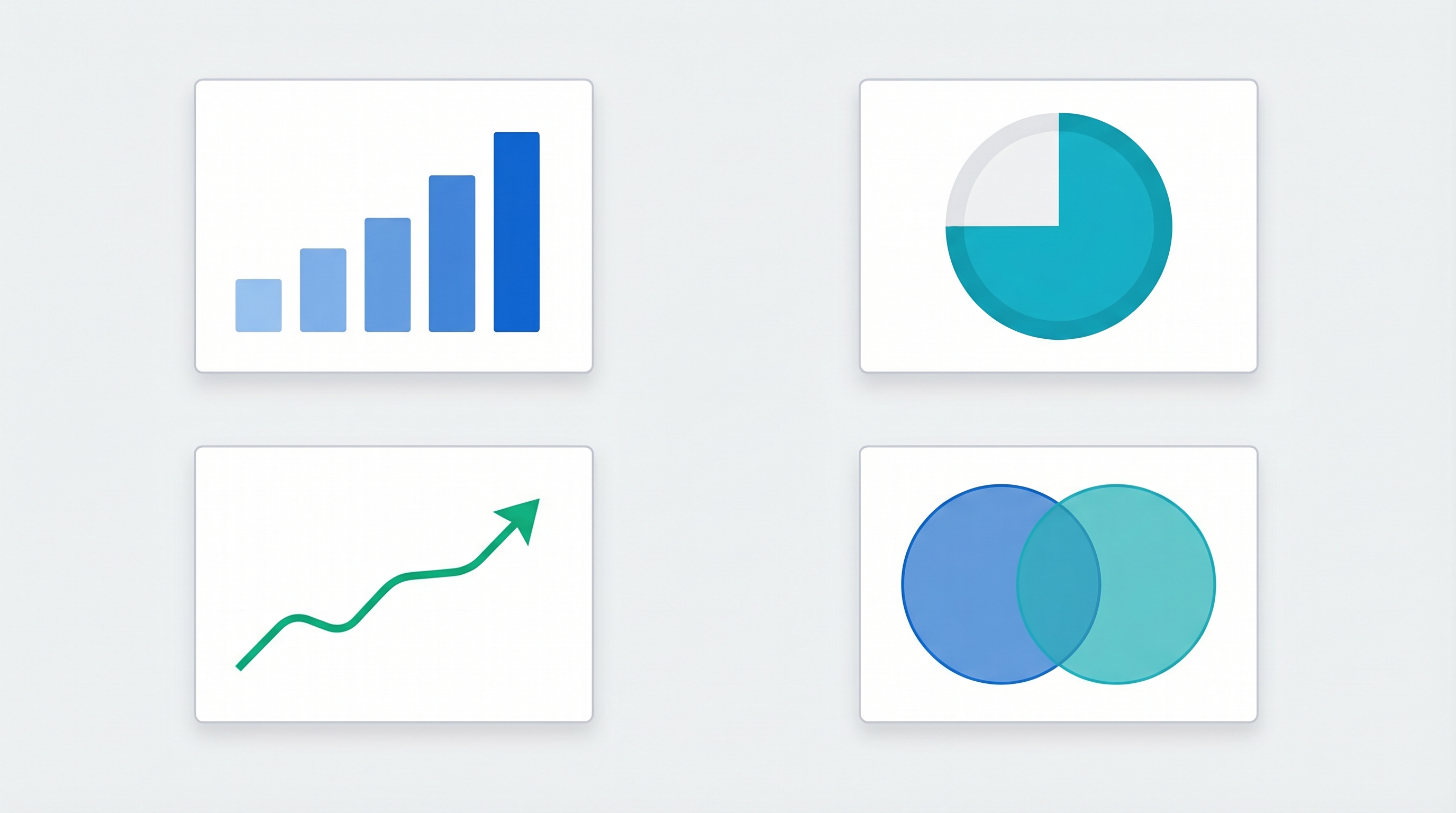
Automate These
- Website change monitoring - pricing pages, feature pages, homepage messaging
- Pricing tracking - detect changes within hours, not days
- Content output tracking - know when competitors publish new content and what topics they are targeting
- Keyword gap detection - identify search terms competitors rank for that you do not
Keep These Manual (For Now)
- Interpreting strategic intent - AI can tell you a competitor changed their pricing. It cannot reliably tell you why.
- Competitor relationship mapping - partnerships, investor relationships, and competitive positioning still require human judgment.
- Qualitative product comparisons - hands-on product testing and UX evaluation need a human perspective.
The Decision Framework
Ask one question about each CI task: "Is this about detecting a change, or interpreting its meaning?" Detection tasks are automatable today. Interpretation tasks are not, at least not reliably. Build your workflow around that line and you will get the best of both AI speed and human judgment.
Frequently Asked Questions
How much does AI competitive analysis cost for a small business?
AI CI tools for small teams typically range from $59 to $300 per month depending on features and competitor count. This compares to $12,000 or more per month for a dedicated analyst. Most teams see positive ROI within 3 months. SpyGlow's free plan lets you start with 2 competitors at no cost.
Can a non-technical founder set up automated competitive intelligence?
Yes. Modern AI CI platforms are built for non-technical users. Setup typically takes 5 to 10 minutes: enter competitor URLs, choose what to monitor, and configure where you want alerts (email, Slack, or in-app). No coding or API work required.
What is the difference between AI competitive analysis and manual competitor research?
Manual research is periodic and error-prone. AI competitive analysis runs continuously, catches changes in real time, and classifies them by importance. The time difference is significant: teams report going from 20 hours per week of manual research down to roughly 2 hours with automation.
How do small teams measure ROI from competitive intelligence tools?
Track four metrics: hours saved on research per week, time from competitor change to your team's response, changes in deal win rate, and number of strategic decisions informed by CI data. Target under 24 hours for time-to-insight. Battle cards are a good starting point for measuring win-rate impact since they directly influence sales conversations.
Is AI competitive intelligence accurate enough to rely on?
AI CI tools significantly reduce error rates compared to manual processes. The best practice is a hybrid approach where AI detects and classifies changes, and a human validates strategic interpretation. This combination achieves approximately 90% accuracy. SpyGlow's AI-powered analysis is designed for exactly this workflow, surfacing what changed and letting you decide what it means.
What should I monitor first when tracking competitors with AI?
Start with pricing pages, product and feature pages, and blog content. These three signal the most actionable competitor moves. Add job postings for hiring intent signals once your basic monitoring is running. For content-specific tracking, content gap analysis helps identify where competitors are investing in SEO that you might be missing.
Start tracking your competitors in 5 minutes. SpyGlow's free plan monitors 2 competitors with AI-powered change detection. No credit card required. Get started free.
Sources
Sources for this article are based on general industry research and publicly available data from competitive intelligence vendors including Crayon, Klue, and Semrush. Specific statistics reflect commonly reported benchmarks in the CI industry as of early 2026.
Best Competitive Intelligence Tools for Startups in 2026 (and Why Agentic Platforms Win)
A founder's guide to the best competitive intelligence tools in 2026, the three categories that matter, and why agentic AI platforms like SpyGlow change the game.
Content StrategyContent Gap Analysis: How to Publish What Will Rank
Most content teams don't have a content problem-they have a prioritization problem. Learn how content gap analysis finds competitor-winning topics and turns them into a plan you can execute.
Competitor MonitoringWhat Is Competitive Intelligence? A Complete Guide for Startups
Learn what competitive intelligence really is, why it matters for startups, and how to build a system that turns competitor data into winning decisions.
Ship the response, not just the read.
Free forever for your first two rivals. No credit card. Five minute setup.