
Competitive Intelligence for Product Leaders: Decision Protocol
Build a repeatable process for converting competitor signals into roadmap decisions. Classify moves, score impact, and assign actions without endless debate.
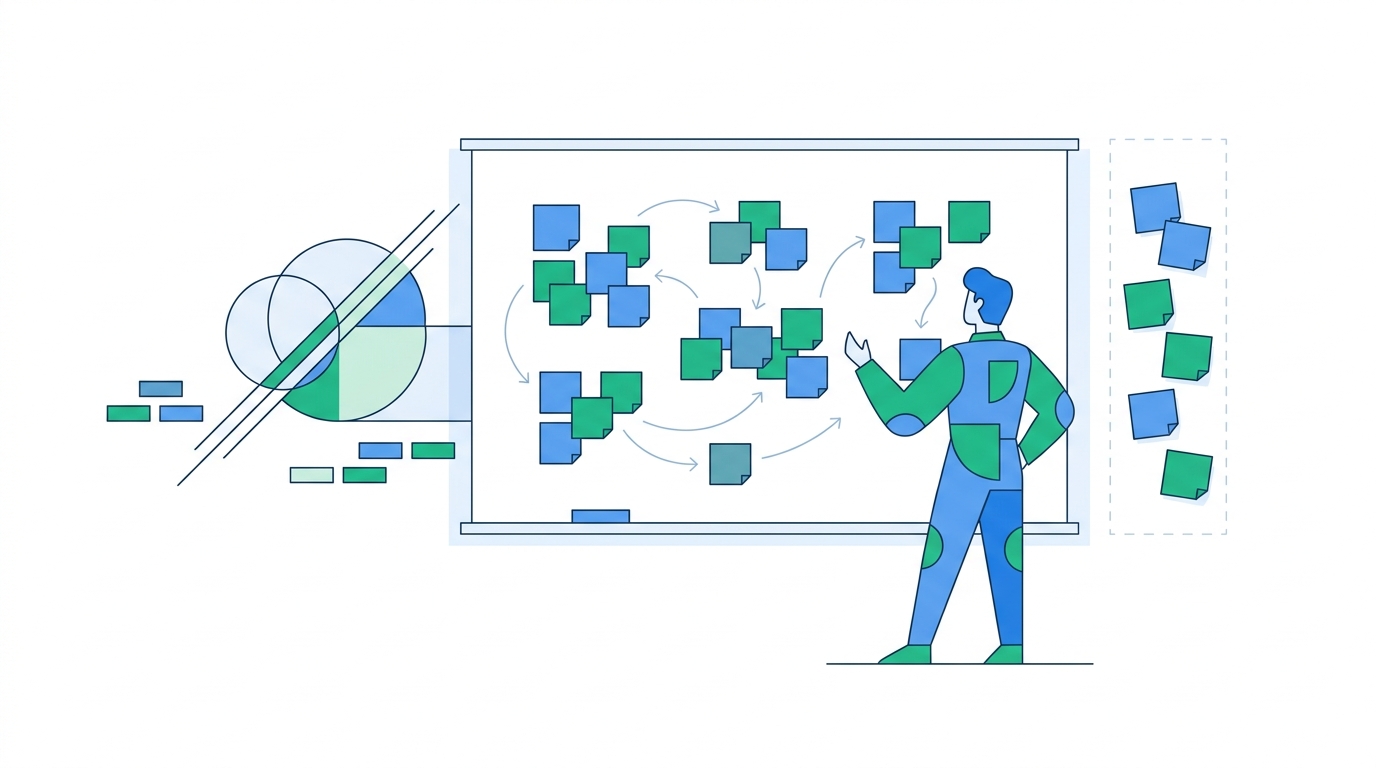
TL;DR: A competitor ships a new enterprise tier. Prospects start mentioning it on calls. Your product team still has no protocol for deciding whether to react, wait, or ignore it. This post gives you that protocol: classify the move, score its impact, then convert it into one summary, one reason, and one assigned action. No dashboards. A decision system.
A competitor drops a new enterprise tier on a Tuesday morning. By Thursday, three of your AEs have mentioned it in deal notes. By Friday, it's a Slack thread with twelve opinions and zero decisions.
That's not a detection problem. You heard about the move. The problem is everything that comes after hearing about it.
Most product teams have no repeatable process for converting a competitor signal into a roadmap decision. They hear the move, they argue about it, and then the week ends. This post builds the process you're missing. It covers classification (what kind of move is this?), scoring (how much should it matter?), and conversion (what does each team actually do with it?). Detection is assumed. The hard part starts here.
The problem isn't missing the move, it's not knowing what to do with it
Most product teams hear about competitor changes through sales ("a prospect mentioned it") or Slack noise, not a structured intake process. (martech.org) notes that most teams start with "pick one competitor and two or three channels" with no downstream workflow for product decisions.
The gap between "something changed" and "here's what we do" is where most CI programs fall apart. Plenty of guides stop at outputs like battle cards and win/loss reports. Almost none connect the signal to a specific roadmap tradeoff or tell you which team owns the response.
The breakdown happens across three layers:
- Detection: did you see the move at all?
- Classification: what kind of move is this, and who should care?
- Conversion: what does product, sales, and marketing each do with it?
Most teams only have partial coverage on detection and nothing formal on the other two. This post covers layers two and three.
Not every competitor move deserves a sprint
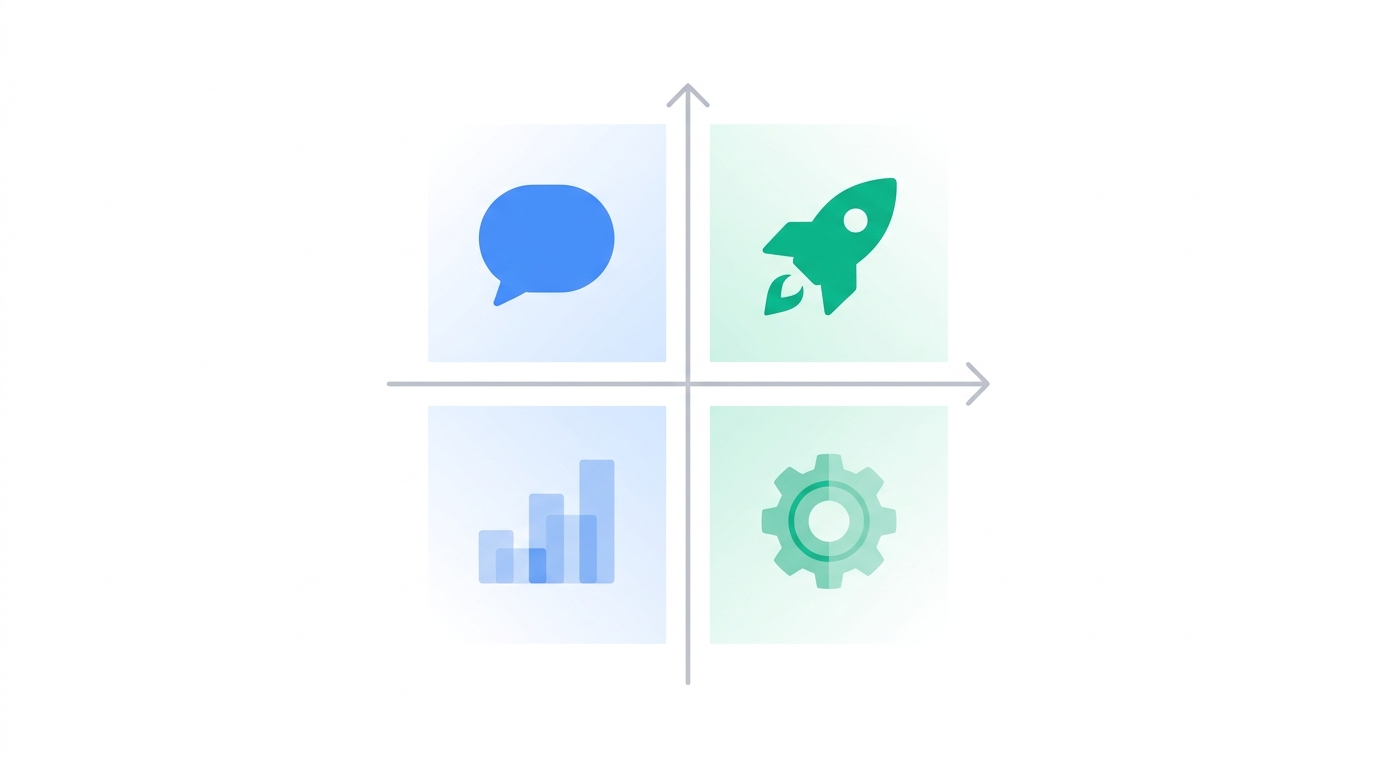
Before you score anything, you need to sort it. Four move types cover the vast majority of what competitors do, and each one has a different response function.
Positioning shift. Messaging rewrites, pricing page restructures, new ICP language, or a sudden emphasis on a segment they hadn't been talking to. This is primarily a marketing and sales problem, but product gets pulled in when the repositioning implies a product gap.
Feature or product move. A new capability, a deprecation, an API change, or a new integration. This one lands squarely on product's desk.
Go-to-market signal. A VP Sales hire from a named competitor. A new case study in a vertical they've never touched. A conference sponsorship in a market you're targeting. These don't require an immediate product response, but they tell you where the competitor is pointing.
Infrastructure or intent signal. Job postings for ML engineers. Rewritten technical docs. A new set of integration partners appearing on their site. These are the earliest signals of a product direction change, often six to twelve months before the launch.
Classification before scoring matters because a pricing change and a feature launch require completely different responses, even if both feel equally urgent in the moment. The team that owns the response is different. The timeline is different. The risk of overreacting is different.
One more thing: not everything that changes is worth classifying. A cookie banner tweak, a footer copyright year update, and an image compression pass are not competitor moves. A new enterprise tier, a VP Sales hire from your top direct competitor, or rewritten API docs are. Part of having a classification system is having permission to ignore the noise.
How to score a competitor move before it becomes a roadmap debate
Once you've classified the move, score it on a 1-10 scale using three inputs.
Customer overlap. Does this move affect accounts you're actively selling or retaining right now? A pricing change in a segment you don't serve scores lower than the exact same change in your core ICP.
Strategic distance. Is the move inside your core use case or adjacent? A competitor launching a feature your top ten accounts have been requesting is a different conversation than a competitor launching a feature in a segment you've explicitly deprioritized.
Signal corroboration. Is this one surface moving, or are multiple surfaces moving in the same window? A pricing page change alone is a 3. A pricing page change, a new VP Sales hire from an upmarket competitor, and a rewritten enterprise case study in the same two-week window is a 7 or 8. Composite signals carry more weight than single-surface alerts because they represent a coordinated strategic move, not a one-off test. (tryanalyze.ai) frames the surface where a signal appears as a key sorting mechanism; composite signals that span multiple surfaces are where the high-impact moves live.
Map your scores to action levels:
- 1-4: Log it. Review it in the weekly brief. No immediate action.
- 5-7: Assign an owner. Produce a one-page summary within 48 hours.
- 8-10: Cross-functional response within 24 hours. Product, sales, and marketing each get a specific ask.
Single-surface alerting tools produce mostly 1-4 scores because they can only see one dimension at a time. The 8-10 scores live in the correlation between surfaces. That's where change detection gives you noise and competitive intelligence gives you a move.
SpyGlow's change scoring runs on exactly this 1-10 model. Alerts trigger at a score of 5 or above and arrive via Slack or webhook within minutes of detection.
The one-summary, one-reason, one-action format
Every scored move above a 5 should produce exactly three outputs before it enters any team's workflow.
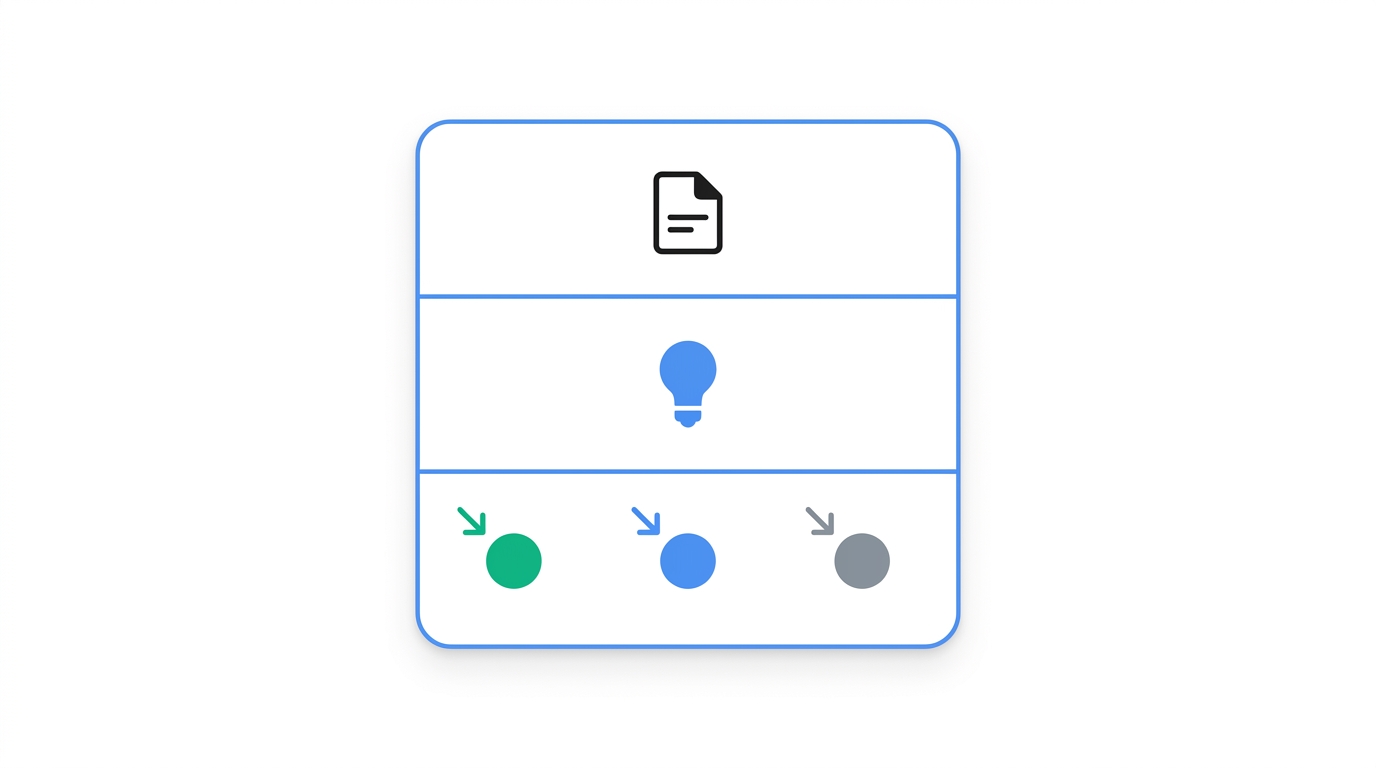
Summary (one sentence, factual): "Competitor X dropped their Pro tier from $99 to $79 and added SSO to the free plan."
Reason (one sentence, interpretive): "They're compressing the mid-market to accelerate PLG conversion before a Series B announcement."
Action (one sentence, assigned): "Product: audit our SSO gating decision by end of week. Sales: update the pricing objection card. Marketing: pull the 'we include SSO at every tier' line into the homepage hero."
Three outputs, three owners, one page. That's it.
This format beats a Slack thread because Slack threads produce opinions, not decisions. It beats a quarterly battle card review because quarterly is too slow for a pricing move your AEs are hearing about this Thursday. The key constraint is that the action must be assigned to a specific function. Not "we should probably respond." Product gets a roadmap question. Sales gets a talk track update. Marketing gets a copy or positioning change. If no one is named, nothing moves.
SpyGlow's Monday brief delivers a weekly rollup across all tracked brands already formatted as summary, signal, and recommended action. The brief runs automatically. You review it, you don't produce it.
Where product leaders lose the signal: the multi-brand blind spot
Most CI programs are built around one flagship product. That assumption breaks as soon as your company has two product lines, or as soon as you're running CI for more than one client brand.
Here's the pattern that gets missed: a competitor tests aggressive pricing on their SMB product, watches the conversion numbers for sixty days, then rolls the same change to their enterprise line. If you're only watching their enterprise product, you see a pricing change with no context. If you're watching both, you see a deliberate market test that's been running for two months and you have time to prepare.
Klue and Crayon both position their CI workflows around account-based monitoring and structured competitive tracking. That's not a criticism; it's just an architectural choice that works for large single-brand companies and doesn't work for anyone else.
The scoring model described above changes when you introduce multi-brand visibility. A move that scores a 4 in isolation scores a 7 when you see the same competitor running the same play across two of their product lines simultaneously. The corroboration input gets a boost because the signal is appearing across brands, not just across surfaces.
SpyGlow supports up to 10 domains per account, each with its own workspace, competitor set, and intelligence feed. The structure isn't a feature; it's what makes the scoring model accurate for teams tracking more than one brand.
Building the playbook into a repeatable weekly rhythm
The classification, scoring, and conversion steps only work if they run on a schedule, not just when sales panics after a prospect call.
Here's a weekly rhythm that actually holds:
- Monday: Review the weekly brief across all tracked competitors. Classify any new moves. Score anything that came in above a 3.
- Tuesday-Wednesday: Convert 5+ scores into the one-summary, one-reason, one-action format. Assign owners.
- Thursday: Sales and marketing owners confirm they've acted or escalated.
- Friday: Log anything that didn't trigger action but should be watched for corroboration next week.
The Tuesday-Wednesday conversion step is where most teams break down, and it almost always breaks down for the same reason: the product leader is still doing triage instead of interpretation. They're still figuring out what happened instead of deciding what to do about it. (martech.org) recommends starting with simple tools and workflows, but that only gets you to detection. The rhythm only holds if detection is automated so that the human time gets spent on classification and conversion.
SpyGlow's Growth plan checks competitor domains every six hours. The Teams plan checks every three hours. A move that happens Monday morning is in the brief before your team meeting, not discovered Thursday on a sales call.
FAQ
How do I decide which competitor moves are worth bringing into a sprint planning conversation?
Score it first. Only moves that score a 7 or higher on the customer overlap, strategic distance, and signal corroboration model belong in a sprint planning conversation. Below that threshold, log it in the Monday brief and revisit if corroboration appears. Bringing a 4 into sprint planning creates noise and teaches your team to ignore the process.
What's the difference between a positioning shift and a product move, and why does it matter for who owns the response?
A positioning shift is a change in how a competitor describes what they do: new messaging, new ICP language, a pricing page restructure. Marketing and sales own the response. A product move is a change in what the competitor actually ships: a new feature, a deprecation, an API change. Product owns the response. The classification matters because the wrong owner produces a slow response or no response at all.
What if a competitor move scores high but we've already decided not to build in that direction?
Score it honestly, then use the one-summary, one-reason, one-action format to document why you're not acting. "Competitor X launched A; we're not building A because B" is a decision, not an oversight. The documentation protects your roadmap in the next quarterly review and gives sales a clean answer when prospects ask.
How do composite signals work in practice, and how do I spot them?
A composite signal is two or more surfaces moving in the same 2-4 week window. A pricing change and a VP Sales hire from an upmarket competitor in the same window is a composite signal. A rewritten docs page and three new ML engineering job postings is a composite signal. Spotting them manually is hard because you'd have to hold the timeline of multiple signals in your head simultaneously. Automated tracking with a shared timeline view makes this tractable.
We only track one competitor right now. Is this playbook overkill?
The classification and scoring steps are worth running even for a single competitor because they force a decision protocol that doesn't exist yet. The multi-brand sections won't apply yet. But the weekly rhythm, the 1-10 scoring model, and the one-summary-one-reason-one-action format all work at any scale. Start with one competitor and one week of the rhythm. The process is easier to expand than to rebuild from scratch later.
Sources
- The Marketer's New Playbook for AI-Powered Competitive Intelligence (martech.org)
- Best Competitive Intelligence Tools (tryanalyze.ai)
- Best Competitive Intelligence Tools Under $500/Month (clientcues.com)
- Guide to Competitive Intelligence (oneperfectslice.ai)
You now have the classification taxonomy, the scoring model, and the conversion format. The fastest way to test it is against one real competitor move from the past 30 days.
If you're tracking competitors in SpyGlow, ask AskGlow: "What did [competitor] change in the last 30 days and what scored above a 5?" You get a sourced, natural-language answer already formatted for the one-summary, one-reason, one-action output. No report to pull. No Slack thread to dig through.
Free plan, two competitors, no credit card. First scored change in under 60 seconds.
25 Questions Your AI Competitive Intelligence Analyst Should Answer
Most CI alerts tell you a page changed. Real intelligence tells you what to do before the 9am standup. Here are 25 specific questions by role with example outputs.
ProductDevTools CI Playbook: GitHub to Pricing Page
Track DevTools competitor moves through GitHub changelogs, docs rewrites, and pricing changes. Learn the six signals that matter and how AI classifies them into actionable intelligence.
Ship the response, not just the read.
Free forever for your first two rivals. No credit card. Five minute setup.