
Competitor Content Velocity: What to Track and Why It Matters
Content velocity is the rate at which competitors produce, update, and expand content. In 2026, it functions as a ranking signal in AI-driven search. Learn the 7 metrics that matter, the right cadence per page type, and a 90-minute quarterly audit that turns competitor data into action.
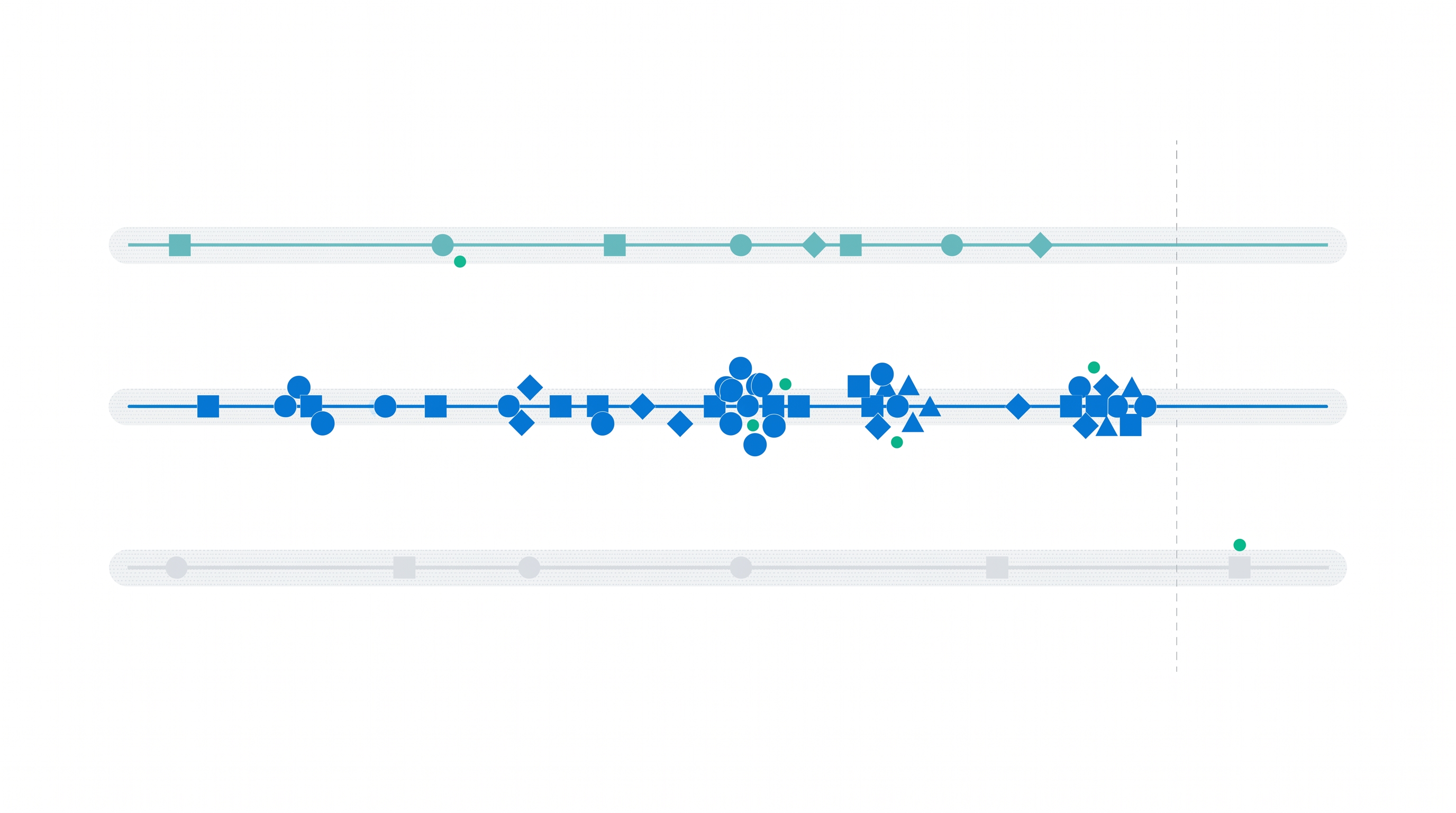
You publish a blog post every Monday. You feel productive. Then you check Ahrefs and notice your top three keywords slipped from page one to page three over two quarters. The competitor that overtook you ships three posts a week, updates their pricing page twice a month, and just rolled out a calculator on the same topic cluster you target.
That is not a content gap. It is an information gap. You did not see the changes happen, so you could not respond to them. The market moved while you were heads-down on your editorial calendar.
Content velocity is the rate at which competitors produce, update, and expand content across their site. In 2026, it functions as a ranking signal in AI-driven search, with same-day deployment now an active strategy for competitive advantage (Source: Fulcrum Digital). Pricing pages alone fire a change alert on 16.3% of monitoring checks (Source: Visualping). By the end of this article, you will know how to define velocity, which seven signals to track, the right cadence per page type, and a 90-minute quarterly audit you can run with three to five competitors.
What Content Velocity Actually Means (And Why Most Teams Track It Wrong)
Content velocity is the rate of change in a competitor's content footprint, not their post count per month. Volume is one input. Update frequency, topical breadth, and format diversity matter just as much.
Break it into four dimensions:
- Publish cadence: how many new pages or posts ship per week
- Update frequency: how often existing top pages get revised
- Topical breadth: new keyword clusters or content categories entering the site
- Format diversity: shifts toward calculators, comparison pages, video embeds, or interactive content
Velocity baselines also vary by category. Ecommerce pages change roughly 53% per month versus 39% for SaaS (Source: Visualping). If your benchmark is borrowed from the wrong category, you either over-monitor or miss real signals. For broader context on monitoring competitors as a whole, see our guide to what competitive intelligence is and why startups need it.
Why Content Velocity Became a Ranking Signal in 2026
AI Overviews, ChatGPT Search, and Perplexity reward freshness and clear structure. Stale pages get bypassed even when they once ranked well in classic Google results. The cost of falling behind on velocity is not slower growth, it is invisibility in the surfaces buyers now use to research.
Stronger competitors win because their pages are easier for AI systems to parse: clear headings, tight answer blocks, useful tables, relevant visuals, and smart internal links with less fluff and more signal (Source: Outrank). The same structural choices that help LLMs cite your content also help human readers skim and trust it.
There is a new category to watch in 2026: AI competitors. These are the domains that show up consistently in AI Overviews, ChatGPT Search, and Perplexity for your target queries. They may not be your traditional SERP competitors. Tracking them requires a separate monitoring lens because the queries that surface them often differ from classic keyword research outputs (Source: Outrank).
AI visibility tracking addresses exactly this. Instead of guessing which competitor pages get cited by LLMs, you watch the surfaces directly and respond when a citation lands on someone else's page that should be yours.
The 7 Metrics That Actually Matter

Most teams track raw post counts. That is too coarse to drive decisions. The seven signals below give you a usable view without drowning you in dashboards:
- Publishing cadence: new posts per week, per competitor, per cluster
- Update frequency: how often top organic pages get revised
- Page-level change rate by page type: pricing fires on 16.3% of checks, news on 11%, investor relations on 7% (Source: Visualping)
- Topic cluster expansion: new keyword groups entering their content over the last 30, 60, and 90 days
- Format diversity: calculators, comparison pages, video embeds, interactive tools
- Engagement decay rate: how quickly unique readers and scroll depth drop off post-publish (Source: OneUptime)
- Time-to-publish on trending topics: how fast a competitor reacts to industry news or product launches
Track these seven, not seventy. Most teams collapse under metric overload because they optimize for completeness instead of decisions.
How Often You Should Check Each Page Type
Monitoring cadence should match the page type. One-size-fits-all schedules over-monitor stable pages and miss high-signal ones (Source: Visualping).
| Page Type | Recommended Check Cadence | Why |
|---|---|---|
| Pricing | Daily | 16.3% per-check change rate, highest signal density |
| Blog index | Every 6 to 12 hours | Catches new posts within the same business day |
| Product or feature pages | Daily | Positioning shifts drive battle card updates |
| Careers | Weekly | Hiring signals reveal team direction |
| Investor relations | Weekly | 7% per-check change rate, lower urgency |
| Homepage hero | Daily | Messaging shifts often precede campaigns |
SpyGlow's change detection lets you set per-page schedules: blog indexes on a six-hour cadence, careers weekly, pricing daily. You do not need separate tools for each page type, and you do not pay for the granularity you do not use.
Building Your Content Velocity Tracking Stack
You can build a working velocity stack on free tiers. The constraint is coverage, not capability.
Free Tier Stack
- Google Alerts: brand and keyword mentions, useful for catching launches and press
- Ubersuggest free tier: 3 searches daily, fine for keyword overlap snapshots
- AnswerThePublic: question-based content gap discovery
- BuzzSumo free tier: engagement metrics on competitor posts
- Meta Ad Library: ad creative velocity, fully free
Paid Stack (Past the Free Tier Ceiling)
- Semrush or Ahrefs: organic keyword and backlink velocity, paid plans starting in the low-to-mid hundreds per month
- A monitoring tool (e.g., Visualping): page-level changes and section monitoring
- A shared log in Slack or Notion: so insights do not die in someone's browser tab
Competitor monitoring sits in the middle of this stack. SEO tools tell you what ranked. Ad libraries tell you what shipped to paid. Page-level monitoring tells you what changed on the site itself, which is the layer most teams miss.
Want to see this in action? SpyGlow tracks competitor pages on per-page schedules and routes only the changes that match your filters. Start a free account, add three competitors, and check back in a week.
A Quarterly Content Velocity Audit (The 90-Minute Version)
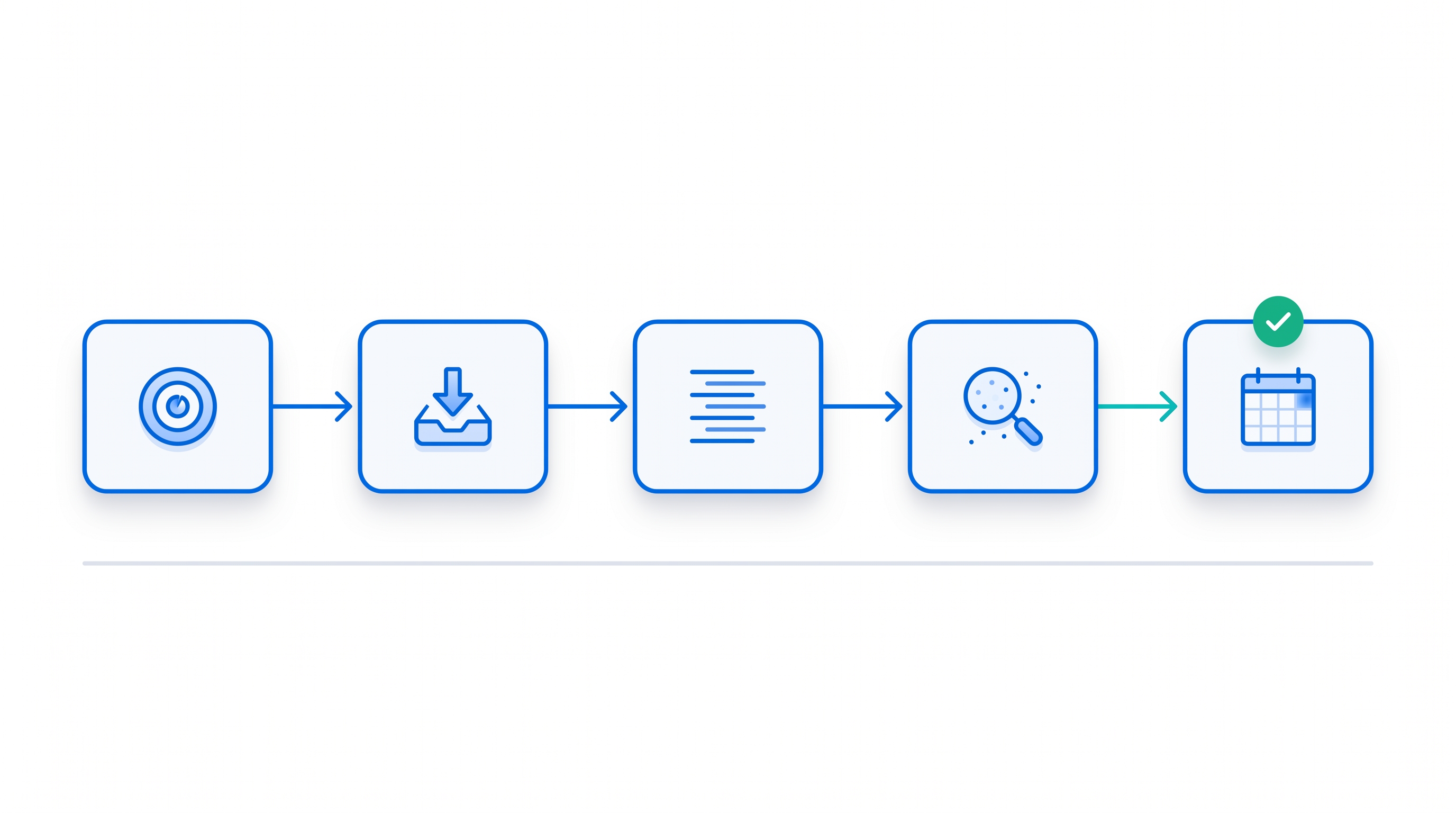
The quarterly audit is the second half of velocity tracking. Real-time alerts catch surges. The audit catches drift.
Step 1: Pick 3 to 5 Direct Competitors
Pick companies prospects actively compare you against in sales calls, not aspirational ones. If a prospect has never mentioned them, they are not on this list (Source: ACS Creative).
Step 2: Pull Top 10 to 20 Organic Pages Each
Limit yourself to top organic pages by traffic or backlinks. Going broader than 20 pages per competitor is a guaranteed way to miss your audit window.
Step 3: Log Publish Date, Last-Updated, Format, and Cluster
One spreadsheet, one row per page. Columns: URL, publish date, last-updated date, format (blog, comparison, calculator, doc), topic cluster, target keyword, and your rank for that keyword.
Step 4: Identify Three Patterns
Look for format shifts (e.g., are they moving from blogs to interactive calculators), topic focus changes (which clusters grew over the last 90 days), and frequency adjustments (is cadence picking up or slowing down).
Step 5: Schedule the Next Audit Before You Close the Tab
Quarterly cadence prevents one-time-audit decay. If you do not put the next date on the calendar before closing the spreadsheet, the audit becomes annual, which is too slow to be useful (Source: ACS Creative).
The output is a one-page summary: three observations, three response actions. Not a 40-tab report nobody reads.
Turning Velocity Data Into Three Concrete Plays
Data without action is overhead. Translate every audit into one of three plays:
Defensive Play
Match cadence on the topic clusters where you both rank in the top 20. If a competitor publishes weekly and you publish monthly on the same cluster, you will lose the cluster within two quarters. Match or fold.
Offensive Play
Find clusters where competitors publish weekly but rank below page one. They are signaling demand without owning supply. Ship two to three better-structured pages there with clearer answer blocks, useful tables, and tighter formatting.
Tactical Play
React to specific surges within seven days. If a competitor publishes five posts on a topic in one week, either respond inside that window or skip it entirely. Late responses to surges do not rank because the citation graph has already settled.
For keyword gap prioritization, score missing and weak keywords on relevance, business value, attainability, intent fit, and expansion potential, then multiply rather than chase all high-traffic keywords (Source: Outrank). Multiplying penalizes a keyword that scores high on traffic but low on attainability, which is usually where time goes to die.
Content gap analysis surfaces topics competitors cover that you do not, so you skip the part where you read 200 posts to find the gaps. For the publish-side workflow, see content gap analysis: publish what will rank.
What Good Looks Like (Benchmarks for a Small SaaS Team)
Numbers without context are noise. Here is what a reasonable velocity profile looks like for a five-person SaaS team:
- Publishing cadence: 2 high-quality posts per week
- Update cadence: 1 update to an existing top-10 page per week
- Tracking time: 30 minutes per week for change review, 90 minutes per quarter for the audit
- Coverage: 3 to 5 direct competitors monitored on per-page schedules, top 20 pages each
- Response time: 48 hours on competitor pricing or positioning changes, 7 days on content surges
Performance also matters at the page level. Core Web Vitals thresholds (LCP under 2.5 seconds, INP under 200 milliseconds, CLS under 0.1) factor into how AI systems and Google evaluate page quality (Source: Outrank). A fast, well-structured page that updates monthly will outperform a slow, unstructured one that publishes weekly.
Frequently Asked Questions
What is content velocity in SEO?
Content velocity is the rate at which a site produces and updates content, including publish frequency, update frequency on existing pages, and expansion into new topic clusters. In 2026, AI-driven search systems weight freshness as a ranking signal, so velocity acts as a competitive moat rather than a vanity metric (Source: Fulcrum Digital).
How do I track competitor blog posts automatically?
Monitor the competitor's blog index page on a 6 to 12 hour schedule using a tool like Visualping or SpyGlow's change detection, and add an RSS reader for backup. The blog index updates as soon as a new post is published, so you catch the post within the same business day rather than at the end of the week.
What is a good blog publishing frequency for a SaaS startup?
Two high-quality posts per week is a defensible baseline for a five-person team, plus one update to an existing top-10 page per week. Match the velocity of competitors in your specific topic cluster rather than chasing an industry average, because cluster-level velocity is what determines whether you hold ranks or lose them.
Which competitor pages should I check daily versus weekly?
Pricing, product or feature pages, and the homepage hero should run daily. Blog indexes should run every 6 to 12 hours. Careers and investor relations can stay weekly because their per-check change rates are lower (Source: Visualping).
How is content velocity different from content volume?
Volume is total output. Velocity is rate of change, which includes new posts, updates to existing pages, format shifts, and cluster expansion. A team can have high volume and low velocity if they publish near-identical posts every week without updating their top pages or expanding into new clusters.
Can I monitor competitor content velocity for free?
Yes for limited coverage. Google Alerts, Ubersuggest's free tier (3 searches daily), AnswerThePublic, and BuzzSumo's free tier cover the basics. Paid tools start to matter once you exceed three competitors or need page-section monitoring, which is where competitor monitoring and tools like Semrush or Ahrefs become worth the spend.
Tracking Velocity Without Burning Out
Tracking content velocity by hand stops working around the third competitor. The spreadsheet falls behind, the audit slips a quarter, and you go back to discovering changes by accident in your Ahrefs reports two months late.
SpyGlow watches every page on the schedule you pick, classifies changes by type and importance, and only emails you when something matters. See plans at /pricing or start with the free tier and add two competitors today.
Sources
- Visualping, Competitor Tracking: What Changes and How Often
- Fulcrum Digital, Same-Day Content Deployment in the Age of AI Overviews
- Outrank, Competitor Website Analysis
- Sprout Social, Social Media Competitive Analysis
- YouTube, Competitor Analysis in 2026: What Actually Matters
- OneUptime, Building Content Publishing Analytics with ClickHouse
- ACS Creative, How to Audit Your Competitors' Content Strategy
Content Gap Analysis: How to Publish What Will Rank
Most content teams don't have a content problem-they have a prioritization problem. Learn how content gap analysis finds competitor-winning topics and turns them into a plan you can execute.
Competitor MonitoringBest Competitive Intelligence Tools for Startups in 2026 (and Why Agentic Platforms Win)
A founder's guide to the best competitive intelligence tools in 2026, the three categories that matter, and why agentic AI platforms like SpyGlow change the game.
Competitor MonitoringWhat Is Competitive Intelligence? A Complete Guide for Startups
Learn what competitive intelligence really is, why it matters for startups, and how to build a system that turns competitor data into winning decisions.
Ship the response, not just the read.
Free forever for your first two rivals. No credit card. Five minute setup.