
How Startups Turn Competitor Signals into Strategy
Most startups track competitors but never act on the data. This guide gives you a repeatable system: a three-cadence review schedule, three decision frameworks, and three growth plays you can run this quarter.
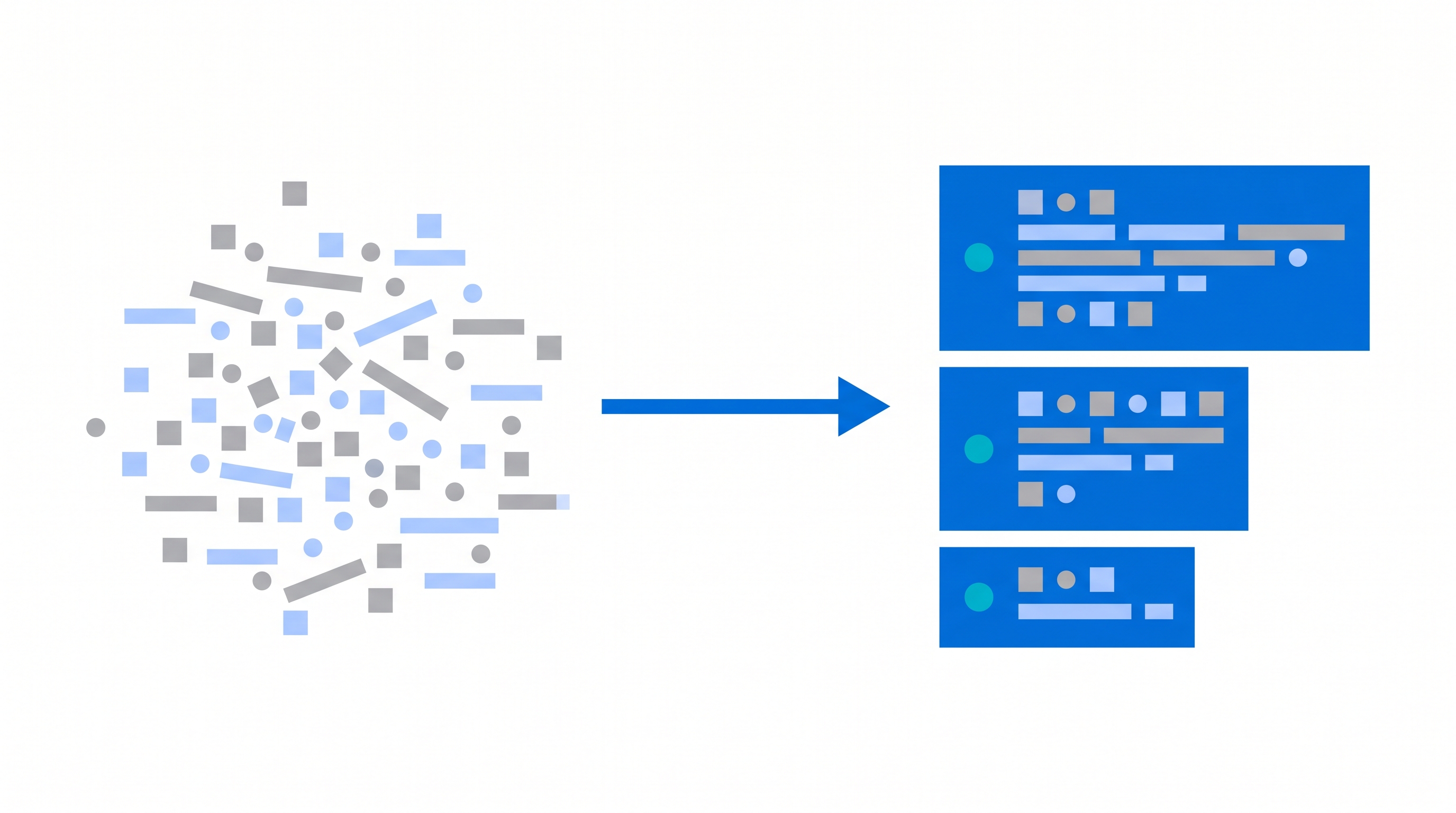
Six months ago, you set up competitor tracking. You have a folder full of screenshots, a Notion doc with price changes, and a Slack channel nobody checks. You have data. You have no strategy.
This is not a tooling problem. It is a systems problem. The signals are there. The process that turns them into decisions is not.
The problem is rarely what to build. It is what to prioritize next, and why. Competitor signals are inputs. Without a system to convert them into decisions, they are noise with extra steps.
This post gives you a repeatable framework: signals in, growth plays out. By the end you will know how to categorize signals by urgency, structure your team's review cadence, and run three specific plays that founders actually execute.
The Signals Worth Tracking (and the Ones to Ignore)
Not all competitor activity deserves equal attention. The useful filter is two axes: urgency (how fast does this affect you?) and strategic weight (does this shift competitive position?).
Four signal types consistently matter:
- Pricing changes - including page structure, packaging, and checkout flow edits
- Product updates and feature launches - new capabilities, removed features, or repositioned functionality
- Content and SEO moves - new pages, topic category shifts, or publishing cadence changes
- Hiring patterns - a new VP of Sales means they are pushing into your segment; a cluster of ML engineers means a product bet is incoming
What to Deprioritize
Some signals look important and are not. Skip these:
- Vanity metrics: follower counts, press mentions, award badges
- Changes that affect enterprise segments you do not serve
- Single data points without a pattern behind them - one blog post is not a strategy
Change detection automates the capture layer - it surfaces pricing page edits, product copy changes, and new feature announcements without manual checking. The framework in this post assumes you have a reliable capture system feeding you signal.
If you need to scope your competitive intelligence program before building the tracking system, start with what competitive intelligence actually covers.
Building a CI Cadence That Fits a Lean Team
Raw signals become strategy only when you process them on a schedule. Without a cadence, you react to whatever you noticed last, not what matters most.
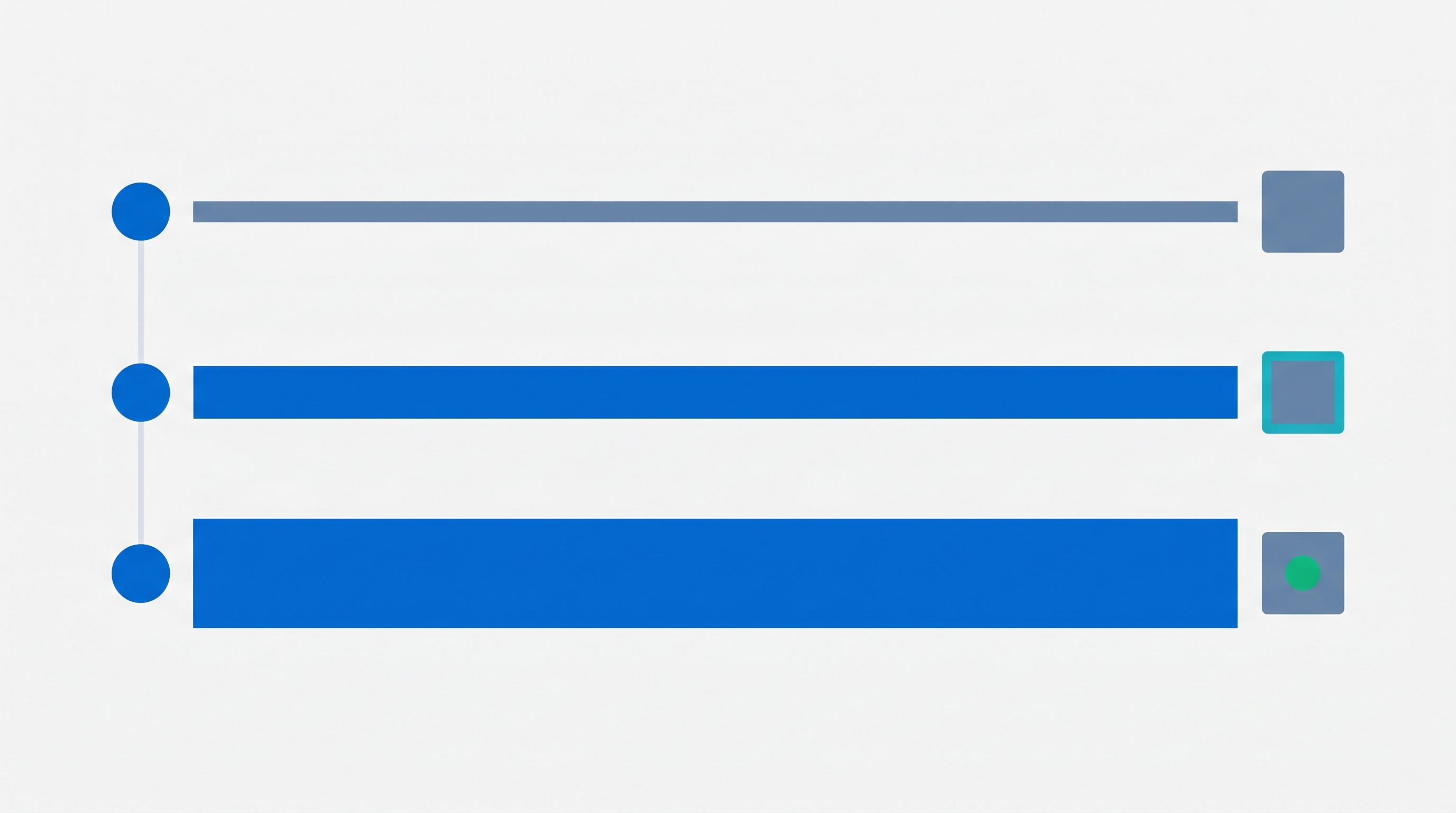
Weekly Signal Scan (30 Minutes)
Review automated alerts from your monitoring tools. Flag anything that changed in pricing, positioning, or product. No action required at this stage. The output is a tagged shortlist, not a decision.
Monthly Synthesis (90 Minutes)
Cluster flagged signals into themes. Three pricing tests in one month is a pattern. One blog post is not. This is where you ask: what is this competitor actually trying to do? The output is a short document of patterns and tentative responses.
Quarterly Strategic Update (Half Day)
Translate patterns into strategic decisions. What do you accelerate, drop, or copy? This feeds directly into your roadmap and go-to-market priorities. It is the only cadence where you make binding commitments.
AI tools enable automated tracking of websites, social media, and code commits, with natural language processing for pattern recognition across reviews and public data. (Source: Coaio.com). The cadence gives you the ritual. Automation gives you the throughput.
Small teams can run this solo with a founder handling monthly and quarterly synthesis. Growth-stage teams should assign an owner per cadence level - typically a founder or head of product.
Three Frameworks for Converting Signals to Decisions
Signals tell you what is happening. Frameworks tell you what to do about it. Three work well at the startup stage.
| Framework | Best For | Time to Apply | Output |
|---|---|---|---|
| RICE scoring | Prioritizing responses to multiple signals | 30-60 minutes | Ranked action list |
| Now/Next/Later matrix | Sorting urgency across competing signals | 15-30 minutes | Categorized backlog |
| Battle card updates | Ongoing positioning and sales context | Ongoing | Living competitor record |
RICE Scoring for CI-Informed Prioritization
When a competitor signal suggests a response, run it through RICE: Reach (how many customers are affected?), Impact (how much does this move revenue or retention?), Confidence (how certain are you the signal is real?), Effort (what does the response cost?). Divide Reach x Impact x Confidence by Effort to rank competing responses.
Calibrate confidence scores based on data quality: 100% for strong data, 80% for some precedent, 50% for speculation. (Source: Lucid.now). This prevents a single competitor screenshot from driving a quarter's roadmap.
The Now/Next/Later Matrix
Sort your responses into three buckets: this week (urgent threats), next sprint (meaningful opportunities), and a later backlog (interesting but not pressing). Competitor signals often feel more urgent than they are. This matrix forces the prioritization conversation.
The key discipline is keeping the "this week" bucket short. One or two items, not ten. If everything is urgent, nothing is.
Battle Card Updates as a Decision Audit Trail
Every time a meaningful signal arrives, update your battle card for that competitor. This creates a living record of why you made each positioning or pricing decision - invaluable when you review your roadmap six months later.
Battle cards in SpyGlow auto-generate from tracked competitor changes, so your sales and product teams always have current positioning context without a weekly update meeting.
The Growth Plays Startups Execute First
Three plays consistently produce early traction from competitive intelligence.

Play 1 - Content Positioning Gaps
Identify topics your competitors rank for where their content is thin, outdated, or only serves the enterprise segment. Publish the version that actually answers the question for your audience.
Startups with faster publishing cycles can own adjacent keywords before incumbents notice. The opportunity is not to outspend them on volume. It is to cover the questions they are too slow or too generic to answer well.
Content gap analysis surfaces these gaps automatically. For the publishing execution side, see Content Gap Analysis: Publish What Will Rank.
Play 2 - Pricing and Packaging Moves
When a competitor tests pricing - and you will see it in landing page or checkout page edits - treat it as a market signal. If they are raising prices, you have a window to capture churned customers. If they are adding a free tier, your conversion messaging needs to respond before they lock in the positioning.
The move is not to match their price. It is to understand what they are signaling about willingness to pay in the market, and adjust your positioning accordingly.
Play 3 - Channel and Messaging Pivots
A competitor adding case studies from a new vertical, or running ads in a channel they previously ignored, signals a bet on a new segment. You can either move into that segment before they establish authority, or double down on differentiation in your core.
AI tools like Clay are being used to pull hiring signals and tech stack data to transform cold outreach into informed conversations. (Source: Scaler Marketing). The same logic applies to inbound strategy: who your competitor is hiring tells you where they are investing next, typically 3-6 months before the public move.
Competitor news monitoring tracks press releases, job postings, and public announcements alongside product changes, giving you hiring signals and channel moves in a single feed.
Avoiding the Data Trap: When Not to Act
More competitive intelligence data does not automatically produce better decisions. The data trap is acting on unverified signals, isolated data points, or competitor moves that do not apply to your market position.
The Verification Rule
Before acting on any signal, answer three questions:
- Is this confirmed? Did you observe it directly, or did an AI summarize it from sparse data?
- Is this a pattern? Has it happened more than once in the past 30-90 days?
- Does it affect your segment? Does this move target the same customers you serve?
AI Limitations Are Real
LLM-generated competitor summaries can miss context, misclassify changes, or synthesize details from limited input. Use AI to surface and categorize signals. Use human judgment to interpret and act on them. These are different jobs.
Glilot Capital pushes founders into direct conversations with enterprise buyers - CISOs in their case - before acting on market data. (Source: Ynetnews). Competitor signals should push you toward customer conversations, not away from them.
The Urgency Inversion
The counterintuitive rule: the more urgent a competitor signal feels, the more important it is to verify before responding. Panic pivots burn resources fast and rarely trace back to a real competitive shift.
The discipline of verification is not bureaucracy. It is the difference between a responsive strategy and a reactive one.
Starting Your CI-to-Strategy System in 30 Days
You do not need a full competitive intelligence function to start. You need a capture layer, a cadence, and a decision framework. Here is a 30-day sprint.
Week 1 - Audit your current state. List every competitor you track. Write down where you currently get signals (manual checks, alerts, tools). Identify the biggest blind spots in your current setup.
Week 2 - Set up automated capture. Configure monitoring on your top 3-5 competitors. Prioritize their pricing pages, product pages, and homepage. Route alerts to a single channel - Slack, an email digest, or a shared board.
Week 3 - Run your first synthesis. Apply the Now/Next/Later matrix to everything you captured in the past two weeks. RICE score the top three responses. Assign an owner and a deadline for each.
Week 4 - Execute one play. Pick the highest-scoring response and run it. A content gap post, a pricing test, a new sales objection response. Document the outcome so you have a baseline for next quarter.
AI-powered analytics deliver $3.50 for every $1 invested when tied to clear decision workflows. (Source: Lucid.now). The ROI is not in the monitoring. It is in what you do after.
SpyGlow handles the capture layer for you - automated change detection, battle cards, and content gap analysis in one place. Start a free trial and have your first competitor dashboard running by end of week.
Frequently Asked Questions
What is competitive intelligence strategy for startups?
Competitive intelligence strategy is a systematic process for collecting competitor signals, synthesizing them into patterns, and making specific decisions about product, pricing, content, or positioning in response. It is not passive monitoring. It is a cycle that ends in a decision.
The three-cadence structure - weekly scans, monthly synthesis, quarterly updates - is the simplest way to build this without hiring a dedicated analyst. Change detection handles the automated capture layer that feeds the weekly scan.
How often should a startup review competitor data?
Three cadences work for lean teams: weekly signal scans (30 minutes, review alerts and flag changes), monthly synthesis (90 minutes, identify patterns across flagged signals), and quarterly strategic updates (half day, update roadmap and positioning).
Most startups skip the synthesis step and then wonder why the data is not useful. The synthesis step is where scattered signals become patterns. Without it, the weekly scan just produces a longer backlog.
What competitor signals matter most for early-stage startups?
Pricing changes, new product features or removed features, job postings in key functions, and content strategy shifts. Hiring signals and content moves are the most overlooked because they preview competitor strategy 3-6 months before the public announcement.
A new VP of Enterprise Sales is a signal. A cluster of new hires in customer success for a specific vertical is a signal. Competitor news monitoring tracks these alongside product changes in one feed.
How do you turn competitive intelligence into a growth play?
Three plays work reliably: fill content gaps competitors are neglecting, respond to their pricing tests before they lock in customers, and move into verticals they are just entering before they establish authority.
Each play starts with a verified signal, not a hunch. Content gap analysis and battle cards give you the context to execute the first two plays without starting from scratch.
What is the RICE framework and how does it apply to market intelligence?
RICE stands for Reach, Impact, Confidence, and Effort. When a competitor signal suggests a response, score the proposed action on each dimension, divide Reach x Impact x Confidence by Effort, and prioritize by score.
Calibrate your confidence score based on data quality: 100% for a confirmed, repeated signal; 80% if you have some precedent; 50% if it is speculative. This keeps competitive intelligence tied to actual business impact rather than recency bias.
How do startups avoid acting on bad competitor data?
Verify before acting. Confirm the signal is real (not an AI inference from thin data), check if it is a pattern (not a single observation), and test whether it applies to your customer segment.
Build a short verification checklist into your monthly synthesis ritual. If a signal fails all three questions, add it to a watchlist rather than acting immediately. One data point is not a strategy.
You have the signals. The missing piece is the system that converts them into decisions your team can act on. Set up the cadence, apply the frameworks, and run one play this quarter. That is how the data folder turns into a growth function.
SpyGlow automates the capture layer so you can spend your time on the strategy, not the spreadsheets. Start free and have your top competitors tracked before your next weekly scan.
Sources
- Lucid.now - ROI Frameworks for Startup Decision-Making
- Semrush - Competitive Intelligence
- Coaio.com - How AI Optimizes Competitive Intelligence for Software Development and Tech Operations
- Scaler Marketing - From Startup to Enterprise: How AI Is Changing the Game
- Ynetnews - Glilot Capital Market Validation Approach
What Is Competitive Intelligence? A Complete Guide for Startups
Learn what competitive intelligence really is, why it matters for startups, and how to build a system that turns competitor data into winning decisions.
Content StrategyContent Gap Analysis: How to Publish What Will Rank
Most content teams don't have a content problem-they have a prioritization problem. Learn how content gap analysis finds competitor-winning topics and turns them into a plan you can execute.
Competitor MonitoringBest Competitive Intelligence Tools for Startups in 2026 (and Why Agentic Platforms Win)
A founder's guide to the best competitive intelligence tools in 2026, the three categories that matter, and why agentic AI platforms like SpyGlow change the game.
Ship the response, not just the read.
Free forever for your first two rivals. No credit card. Five minute setup.