
Feature Parity to Narrative Advantage: CI for Product Roadmaps
Smart product teams read competitor moves as narrative signals, not feature checklists. Learn how to use competitive intelligence to prioritize roadmaps and build differentiation.
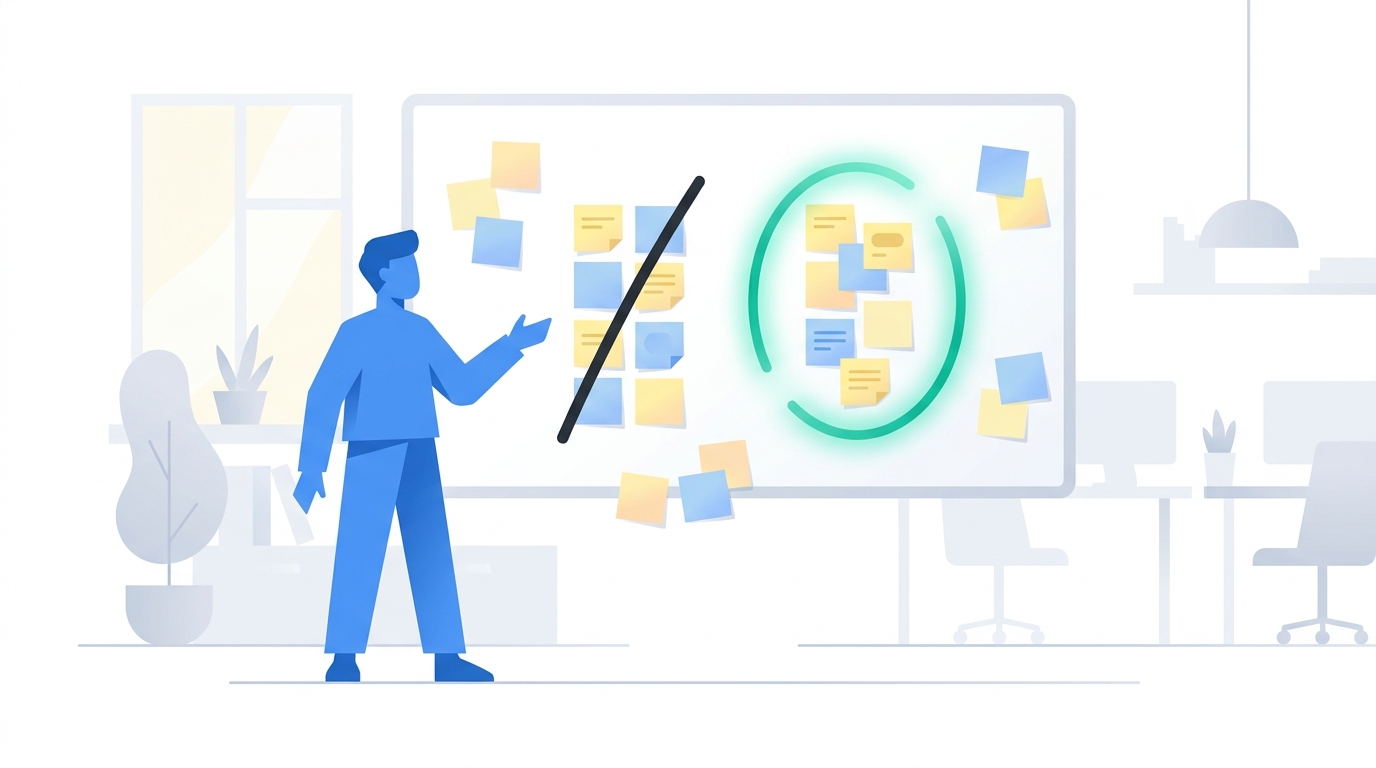
TL;DR: When a competitor ships a feature, the reflex is to add it to the backlog. That reflex turns your roadmap into a mirror. Teams who read competitor moves as narrative signals instead of feature checklists build differentiated products and win more deals. Here's how to build that muscle in under a week.
Your competitor just shipped something. Someone dropped a link in Slack. Within 24 hours, there's a ticket in Jira.
Sound familiar? That's not a workflow problem. It's a signal problem. You're reacting to noise, not reading strategy.
This post is for product, PMM, and growth leads at 30-200 person B2B SaaS companies tracking three to ten competitors. If you're tired of your roadmap looking like a catch-up sprint, keep reading.
The feature parity trap, and why smart teams still fall into it
The reflex is almost automatic. A competitor ships a feature, a sales rep flags it, and the PM logs a backlog ticket. Repeat that cycle for 12 months and your roadmap is no longer yours. It's a lagging mirror of whatever your competitors decided to build.
Productboard's breakdown of feature parity names this trap clearly: reactive parity erodes differentiation and hands your competitors the product narrative. You're not building toward a vision. You're chasing a moving target set by someone else's strategy team.
The cost shows up in two places. First, velocity: your engineering cycles go to matching rather than advancing. Second, positioning: when you and your competitor ship the same feature within a quarter of each other, neither of you owns it.
The root cause isn't laziness. It's the quality of the signal reaching the team. Matthew DeAngelis put it plainly in a LinkedIn post on how most companies misuse CI: "Competitive Intelligence is not a reporting function. But most companies still treat it like one. Win/loss decks. Feature grids."
Feature grids are noise organized neatly into columns. They tell you what a competitor shipped. They don't tell you why, and they don't tell you what to do about it.
Change detection gives you noise. CI gives you intelligence.
The difference is concrete. Noise looks like this: a cookie banner copy tweak, a footer copyright year update, an image compression change, a tracking pixel added. These are real changes. They mean nothing strategically.
Intelligence looks like this: "Pricing dropped 17%, update your battle card today." "New enterprise tier added, their positioning is shifting." "API docs rewritten, a developer platform is live." Those are moves. They tell you something about where a competitor is going.
What a competitor move actually tells you (if you read it right)
Every competitor move is a data point. But a single data point is almost never enough to act on. The teams who win at this read moves as narrative signals, not checklists.
A pricing change isn't just a pricing change. It signals a repositioning: who they want to serve, what segment they're exiting, and what they'll charge going forward. A rewritten API doc signals a developer platform push. A new VP of Sales hired from a known enterprise vendor signals an upmarket move. These aren't backlog tickets. They're inputs to your positioning decisions.
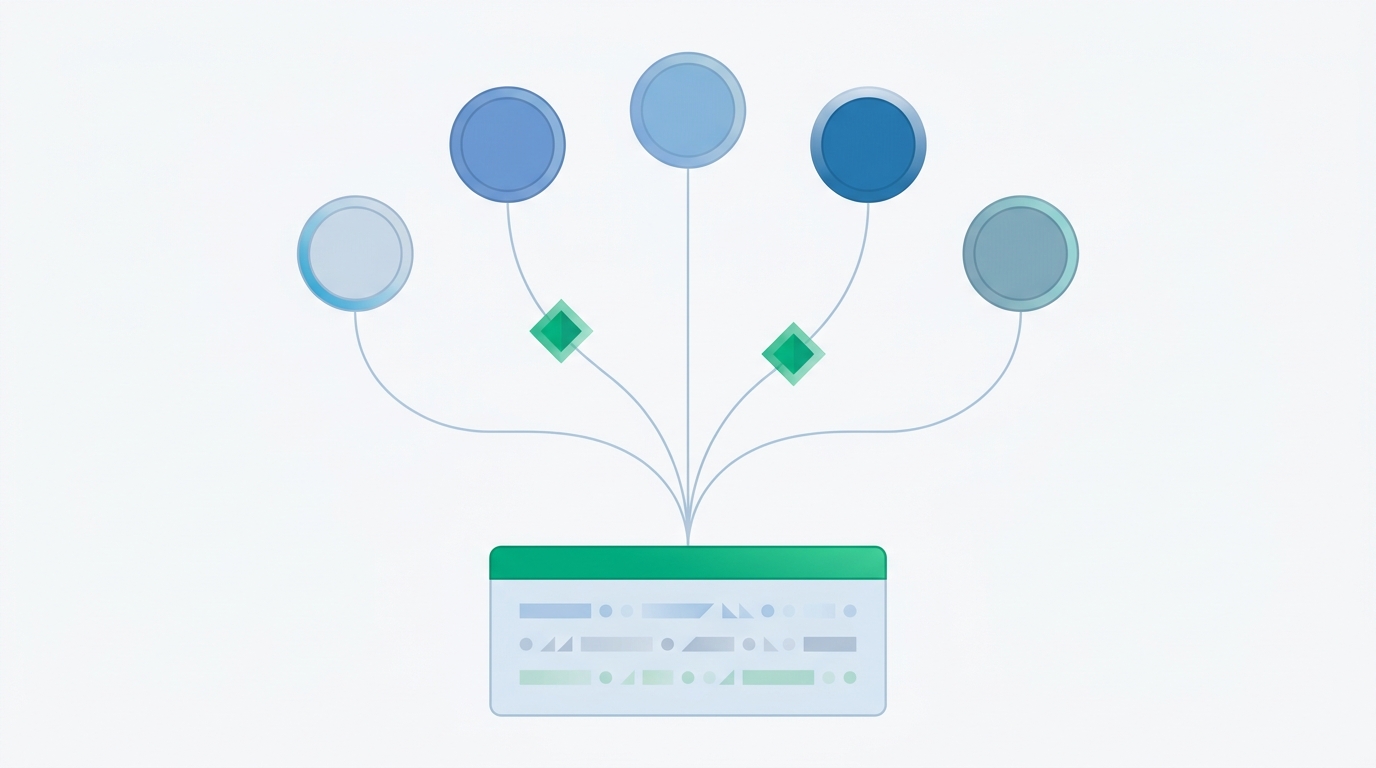
The real leverage comes from composite signals: patterns that only become visible when two or more surfaces change in the same window. Take this example. A competitor restructures their pricing page, publishes a new enterprise case study, and hires a VP of Sales from a company known for enterprise deals, all within 30 days. Any one of those alone is trivia. Together, they're a clear signal: this competitor is exiting your segment and moving upmarket.
Unkover's 2026 AI CI playbook makes the same point in terms of CI maturity: "The practical goal for 2026 is reaching Level 3-4. Start with a 30-day pilot tracking 2-3 competitors before investing in platforms." The reason for the pilot isn't to gather more data. It's to build pattern recognition. Volume without synthesis is still noise.
Here's what reading that composite signal properly looks like in practice:
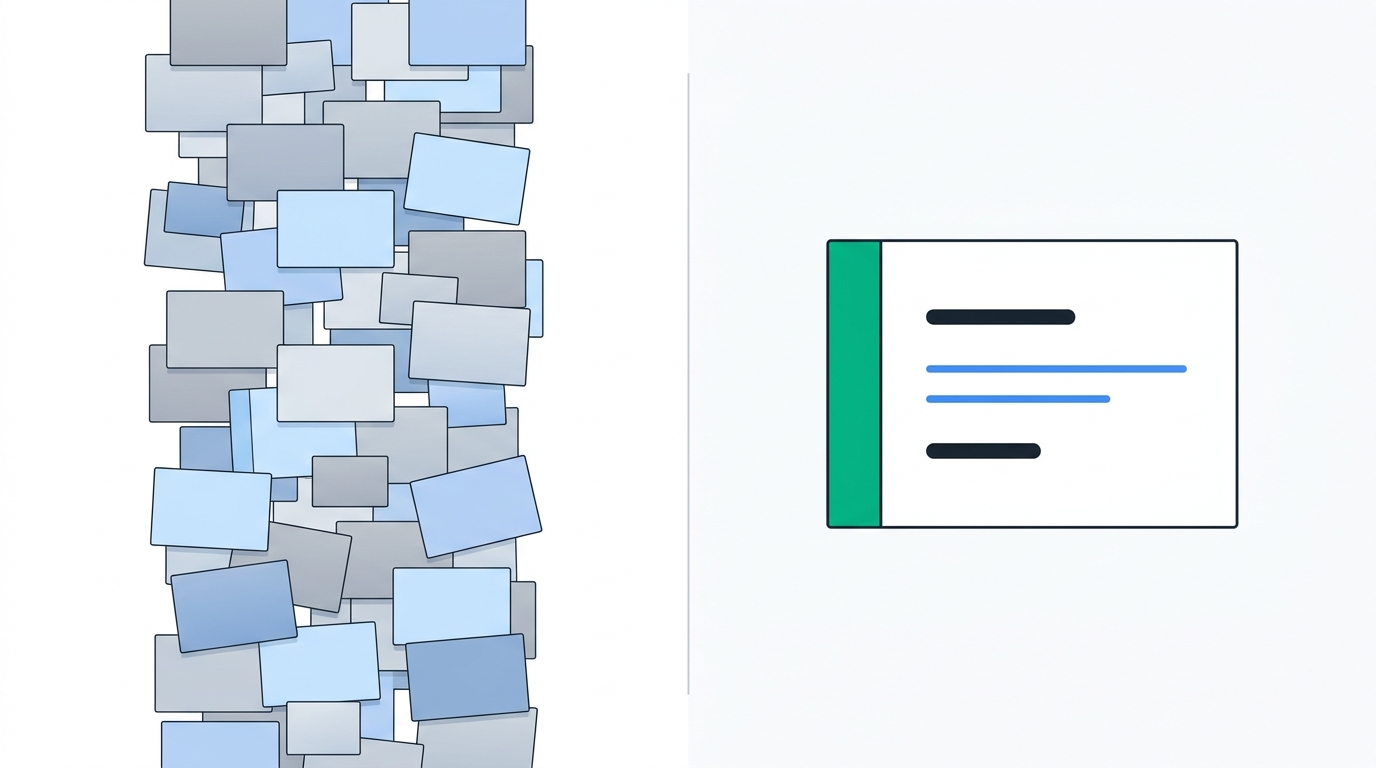
- Summary: Competitor X dropped their SMB tier and added enterprise packaging
- Why it matters: They're exiting your primary segment
- Action: Update your positioning to own the SMB narrative they just vacated
That's not a backlog ticket. That's a go-to-market decision you can make today.
How product teams operationalize CI into roadmap decisions
Reading signals is step one. The harder part is building a workflow so every competitor move gets routed to the right response, not just the nearest backlog.
Here's a five-step loop that works for teams tracking three to ten competitors:
- Detect the move. Automated monitoring across pricing pages, messaging, docs, hiring boards, and case studies. The coverage surface matters. A competitor can announce a new product direction through a job posting before they ship a single feature.
- Score it. SpyGlow's severity scale runs from 1 to 10. Alerts trigger at 5 or above. A footer change scores a 1. A pricing restructure plus new enterprise positioning scores an 8. The score tells you whether to act today or note it for the weekly brief.
- Synthesize it. What does this move signal about their strategy? This is the step most teams skip. They stop at "a page changed" and go straight to "add to backlog." The synthesis question is: what are they telling the market?
- Decide: narrative, roadmap, or neither. More on this below.
- Ship the response. Updated battle card, repositioned landing page, or a new feature brief. The response is always specific to what the signal told you.
Lacework showed what happens when this loop is integrated into deal workflows rather than treated as a separate research function. By merging their compete strategy with win-loss insights through Klue, they achieved CI visibility in 90%+ of closed-won deals company-wide (Lacework x Klue case study). The CI didn't live in a deck. It lived in the deal.
The key decision at step four is the one most PMs default wrong. Three valid responses exist, and only one of them is "build something":
- Narrative response: Update messaging, not the product. Your competitor shipped a feature you already have but never talk about. Fix the story, not the roadmap.
- Roadmap response: Accelerate or deprioritize a planned bet based on what the signal tells you about market direction. This is rare. It should be rare.
- No response: The competitor move is in a segment you don't serve. Ignore it deliberately.
If every signal triggers a narrative response or a roadmap response, you're still in reactive mode. The discipline is in the "no response" call.
Why multi-brand teams have a structural advantage here
Single-brand teams have a fundamental blind spot: they only see their own competitive surface. Multi-brand teams see the category.
Competitors routinely test positioning changes on a secondary product or sister brand before rolling them to the flagship. A team tracking one domain never sees the test. By the time the positioning hits the flagship, the single-brand team is reacting to the finished move, not the experiment.
Teams tracking up to ten competitor domains in parallel, each with its own monitoring and context, catch the experiment. They see a pricing structure appear on a lower-profile product two weeks before it hits the main site. That's not an alert. That's an early warning.
This is the gap that platforms like Klue and Crayon can leave if your CI workflow needs to track multiple brands or product lines in parallel. For an agency managing CI across five clients, or a multi-product SaaS team tracking competitors per product line, it creates a structural blind spot.
The weekly brief becomes especially valuable in a multi-brand setup. A rollup across all tracked brands surfaces timing correlations that would be invisible otherwise. Two competitors in different segments both shift to annual-only pricing in the same week. That's not a coincidence. That's a market signal, and a team running CI across multiple domains is the one who catches it first.
The market is moving in this direction. The global CI tools market is projected to grow from $5.70 billion in 2025 to $19.18 billion by 2035 (LinkedIn market forecast). Multi-brand CI is becoming a professional discipline, not an edge case.
Turning CI signals into narrative advantage, not copycat features
Narrative advantage means your product story is positioned in the gap your competitor just created or can't credibly claim.
When a competitor moves upmarket, the SMB narrative is yours to own. When they add complexity, simplicity becomes your story. When they raise prices, your pricing becomes a feature. These aren't reactive moves. They're opportunistic ones that require you to know, in near-real-time, what your competitor just did.
Productboard's framing on feature parity draws the line clearly: sometimes parity is the right call, but only when a feature is table stakes for the category. When a competitor makes a strategic bet, matching it isn't parity. It's conceding the narrative.
This is where battle cards earn their value, and where most teams build them wrong. A feature grid tells a rep what the competitor has. A battle card built from a composite signal tells a rep what the competitor is doing and why your story is better right now.
Example: a competitor raises prices, adds an enterprise tier, and hires three enterprise AEs in 60 days. The battle card from that composite signal isn't "here's a feature comparison." It's "they're chasing enterprise deals. Here's why your prospect fits a segment this competitor just signaled they're abandoning."
That's a specific, current story. Reps use it.
The data backs this up. According to Arcade's battlecard research, 71% of businesses using battle cards report higher win rates, and 93% of those say the improvement exceeds 20%. Blackbaud deployed Klue's Compete Agent alongside battle cards and boosted competitive win rates against their top competitors by 28 points (Blackbaud case study). These outcomes don't come from feature grids. They come from current, specific narratives built from real signals.
Feature grids give you parity. Composite signals give you a narrative.
Setting up the workflow in under a week
You don't need a dedicated CI team to run this. Here's a realistic setup sequence for a PM or PMM starting from scratch:
Day 1: Identify your three to five highest-priority competitors and the surfaces that matter most for your category: pricing page, docs, case studies, job board. Rank them by how often they change and how directly those changes affect your deals.
Day 2: Configure monitoring with severity thresholds so only moves scoring 5 or above trigger alerts. Everything below that feeds into the weekly brief but doesn't demand same-day attention.
Day 3: Define your three response types in a shared doc (narrative response, roadmap response, no response) before the first alert arrives. This sounds like overhead. It isn't. When an alert lands at 9 AM on a Tuesday, you want the decision framework already written, not built under pressure.
Day 4: Connect Slack or webhook so alerts reach the people who need them: the PM, the PMM, and the AE on the relevant competitive deals. Alerts that land in an email inbox die there.
Day 5: Run a retrospective on the first week's signals. How many were noise? How many triggered a real response? Adjust your severity thresholds accordingly.
The Unkover recommendation to start with a 30-day pilot tracking two to three competitors before scaling applies here. You're not trying to boil the ocean in week one. You're building the reflex to read signals strategically rather than reactively.
Yury Larichev's analysis of SaaS CI puts the stakes plainly: "B2B SaaS customer acquisition costs have surged more than 20% in 2026. That means every lost deal hurts more than ever." A deal lost because your rep didn't have the current competitive narrative is an expensive miss. The workflow above costs a week to build and one Slack channel to run.
FAQ
Won't tracking competitors constantly pull my roadmap in the wrong direction?
Only if you let every signal become a backlog ticket. The whole point of defining three response types (narrative, roadmap, no response) before alerts start landing is to make "ignore this" a legitimate, deliberate choice. Most signals should get a narrative response or no response at all. Roadmap changes from CI should be rare and always tied to composite signals, not a single data point.
What surfaces should we monitor beyond the obvious pricing page?
Job boards are underrated. A competitor posting six enterprise AE roles tells you more about their 12-month strategy than almost any product change. API docs, case study pages, and partner directories round out the picture. The goal is to cover the surfaces where strategic intent shows up before it's announced publicly.
How do we stop CI from becoming a distraction for the sales team?
Keep the delivery format tight. One summary, one reason, one action per alert. If a rep has to read four paragraphs to understand what changed and why it matters for their deal, they won't read it. Battle cards built from composite signals should arrive formatted for a 30-second skim during a deal prep session, not a 10-minute read.
We only track two or three competitors right now. Is composite signal analysis even possible at that scale?
Yes, because composite signals come from multiple surfaces on the same competitor, not just multiple competitors. A single competitor making pricing, messaging, and hiring changes in the same 30-day window is a composite signal. You don't need ten competitors tracked to spot it. You need one competitor tracked across enough surfaces that the pattern becomes visible.
How do we convince the product team to treat CI inputs as roadmap signals rather than just sales prep material?
Start by routing one composite signal through the full five-step workflow and showing the output: the narrative response, the updated battle card, and the deal outcome. One concrete example does more than any process document. If a PMM can show that a competitor's upmarket move let them own the SMB narrative in three active deals, the product team will pay attention.
Sources
- Productboard: Feature parity: What it is and why it's a trap
- Matthew DeAngelis LinkedIn post on competitive intelligence
- Unkover: AI competitive intelligence playbook 2026
- Klue: Lacework case study
- Klue: Blackbaud case study
- Arcade: Competitive battlecard template and research
- LinkedIn: Competitive intelligence tools market size report
- Klue: AI strengths and weaknesses in competitive intelligence
- Yury Larichev: The art of SaaS competitive intelligence
SpyGlow's AskGlow analyst lets you query your competitor's full change history in natural language: "What has Competitor X done to their pricing page in the last 90 days?" If your team is building the narrative response workflow described above, that's where you start. Try it free, no credit card required.
25 Questions Your AI Competitive Intelligence Analyst Should Answer
Most CI alerts tell you a page changed. Real intelligence tells you what to do before the 9am standup. Here are 25 specific questions by role with example outputs.
ProductDevTools CI Playbook: GitHub to Pricing Page
Track DevTools competitor moves through GitHub changelogs, docs rewrites, and pricing changes. Learn the six signals that matter and how AI classifies them into actionable intelligence.
Ship the response, not just the read.
Free forever for your first two rivals. No credit card. Five minute setup.