
How to Find Content Gaps Your Competitors Are Exploiting
Your competitors are ranking above you by filling content gaps you haven't found yet. Learn a step-by-step process to uncover keyword, intent, format, and value gaps, then prioritize which ones to fill first for maximum organic traffic impact.

You published 20 blog posts last quarter. Your competitor published 10. They are ranking above you for the keywords you targeted. The difference is not volume. It is precision. They found the gaps you missed, and they filled them with content that matched exactly what searchers wanted.
This is not a rare scenario. Data-driven gap analysis can increase organic traffic by up to 40% for established sites (Source: Undetectable.ai). The teams winning organic search are not producing more content. They are producing the right content, targeting topics, formats, and intent angles that no one else covers well.
Most content teams create from intuition. They brainstorm topics in a meeting, pick what sounds interesting, and publish. Competitors who win create from intelligence. They study what is already ranking, identify what is missing, and build content specifically designed to fill those holes. This guide walks through a repeatable process to uncover the content gaps your competitors are already exploiting, then prioritize which ones to fill first.
What Is a Content Gap (And Why Most Definitions Are Too Narrow)
The standard definition of a content gap is a keyword your competitors rank for that you do not. That definition is incomplete, and following it will leave real opportunities on the table.
A content gap is any topic, format, intent, or depth that your audience needs but your site does not provide. The keyword view catches only one dimension. For 2026, think in four gap types:
- Semantic gaps - Topics you have not covered at all
- Intent gaps - You have content on the topic, but it targets the wrong search intent (a product page when searchers want a tutorial)
- Format gaps - Missing video, templates, interactive tools, or downloadable resources that competitors offer
- Value gaps - Your content lacks original data, first-hand experience, or unique perspective
This matters more now than ever. Google's December 2025 Core Update heavily weights Experience in E-E-A-T (Source: Yotpo). Two sites can target the same keyword, but the one with original research, customer stories, or interactive tools wins because it demonstrates real expertise. Keyword-only gap analysis misses this entirely.
For a deeper look at how to act on these gaps once you find them, see our guide on content gap analysis: publish what will rank.
Step 1: Map Every Piece of Competitor Content
Before you can find gaps, you need a clear picture of what already exists. Start by identifying 3-5 direct competitors (companies selling similar products to similar buyers) and 2-3 indirect competitors (sites competing for the same keywords but in adjacent categories).
Build a Competitor Content Inventory
For each competitor, catalog every piece of content with these data points:
- URL - The actual page
- Primary keyword - What the page targets
- Estimated traffic - Monthly organic visits
- Publish date - When it went live (or was last updated)
- Content format - Article, video, template, tool, podcast, landing page
site:competitor.com plus your target topics to manually catalog their content. Use Ahrefs' free webmaster tools or Similarweb's free tier for traffic estimates. This works well for 2-3 competitors but gets tedious beyond that.
Paid method: Semrush's Content Gap tool or Ahrefs' competing domains report can export keyword overlaps and exclusives at scale. Expect to pay $99-129/month for either platform.
Automated method: SpyGlow's competitor monitoring tracks competitor blog publishing frequency, new pages, and topic shifts automatically, keeping your inventory current without manual re-audits every quarter.
Do not limit your inventory to blog posts. Check competitor resource centers, help documentation, landing pages, YouTube channels, and podcast episodes. Format gaps are often the biggest wins because most teams only audit written content.
Step 2: Run a Keyword Gap Analysis
With your content inventory built, the next step is identifying the specific keywords where competitors have coverage and you do not.
The Keyword Gap Process
- Export your ranking keywords from Google Search Console (free) or your SEO tool of choice
- Export each competitor's ranking keywords using Ahrefs, Semrush, or a similar tool
- Find the exclusives - keywords they rank for that you do not rank for at all
- Find the weak spots - keywords where you both rank, but they are significantly higher
Filter for Real Opportunity
Not every keyword gap is worth filling. Prioritize keywords where:
- Competitors rank in positions 4-20 (beatable with strong content)
- Monthly search volume meets your threshold (this varies by niche, but for most B2B startups, 200+ monthly searches is a reasonable floor)
- Intent matches your funnel (informational for top-of-funnel, commercial for mid-funnel)
Tool Comparison for Keyword Gap Analysis
| Feature | Free Tools (GSC + Ahrefs Free) | Paid SEO Suites (Semrush/Ahrefs) | AI-Powered Platforms |
|---|---|---|---|
| Cost | $0 | $99-249/month | Varies ($49-199/month) |
| Speed | Hours of manual work | Minutes per competitor | Automated, ongoing |
| Depth | Limited to your own data + estimates | Full keyword databases | Keyword + intent + format analysis |
| Automation | None | Scheduled reports | Real-time alerts and scoring |
| Best for | Bootstrapped startups, <3 competitors | Growth-stage teams, 5+ competitors | Teams wanting continuous monitoring |
Content with first-hand experience saw visibility gains of +38% during late 2025 search volatility (Source: Yotpo). This means filling keyword gaps with rewritten versions of competitor articles will not cut it. You need to bring original perspective, data, or experience to every gap you target.
Step 3: Analyze Intent and Format Gaps
Keyword gaps are the obvious layer. Intent and format gaps are where the real competitive advantages hide.
Spotting Intent Mismatches
Your competitor might rank for "content gap analysis" with a detailed how-to guide while you have a product page targeting the same term. The gap is not the keyword. It is the intent. Google has already decided that searchers want educational content for that query, and your product page will not rank no matter how well-optimized it is.
For each gap keyword, run the search and study what Google shows:
- What format dominates the top 10? (Listicles, tutorials, videos, tools, comparisons)
- Are there Reddit threads or forum results in the top 10?
- Do SERP features (featured snippets, People Also Ask, video carousels) suggest a specific format?
- What is the common word count and depth level of ranking pages?
Finding Format Opportunities
Format gaps are underrated. If the top 10 results for a keyword are all 2,000-word articles, a video walkthrough, an interactive calculator, or a downloadable template could differentiate your content immediately.
Look for these signals:
- All text, no video - Create a video version and embed it in your article
- Guides but no templates - Add a downloadable spreadsheet or checklist
- Theory but no tools - Build a simple calculator or self-assessment
- Expert content but no beginner content - Write the accessible version (or vice versa)
Step 4: Score and Prioritize Your Gaps
You now have a list of gaps: keyword gaps, intent gaps, and format gaps. The mistake most teams make at this stage is trying to fill all of them at once. Instead, score each gap to build a ranked priority list.
The Gap Scoring Framework
Rate each gap on three factors, each scored 1-5:
- Traffic potential - Based on keyword volume and SERP click-through rates. A 5,000 monthly search volume keyword with a featured snippet opportunity scores higher than a 10,000 volume keyword where the top result captures most clicks.
- Business relevance - How close is this topic to your product or conversion path? A gap keyword like "competitor analysis template" is more relevant to a competitive intelligence tool than "marketing strategy examples."
- Competitive difficulty (inverted) - If current rankers have domain authorities of 80+ and publish 5,000-word guides, difficulty is high and the inverted score is low (1-2). If rankers are mid-authority sites with thin content, score this a 4-5.
Build Your Prioritized Gap List
Set up a spreadsheet (or use a tool) with these columns:
| Gap Keyword Cluster | Gap Type | Traffic Potential (1-5) | Business Relevance (1-5) | Difficulty Inverted (1-5) | Priority Score | Target Format | Estimated Effort |
|---|---|---|---|---|---|---|---|
| competitor analysis tools | Semantic | 4 | 5 | 3 | 12 | Comparison guide + template | Medium |
| content gap template | Format | 3 | 5 | 4 | 12 | Downloadable spreadsheet | Low |
| how to track competitor pricing | Intent | 4 | 4 | 3 | 11 | Step-by-step tutorial | Medium |
| competitive intelligence for startups | Value | 3 | 5 | 2 | 10 | Original research report | High |

Start with gaps scoring 12+ (high-traffic, high-relevance, low-difficulty). These are your quick wins. Save gaps scoring under 8 for quarterly planning when you can invest in longer-form, research-heavy pieces.
Automated gap analysis tools can handle this scoring process by tracking competitor content changes and surfacing opportunities ranked by potential impact, saving you the manual spreadsheet work.
Ready to skip the manual research? SpyGlow automates competitor content tracking and gap detection so you spend time creating, not auditing spreadsheets. Start your free trial.
Step 5: Create Content That Fills Gaps Better Than Anyone
Finding a gap is the easy part. Filling it with content that actually ranks and converts is where most teams fall short. A gap-fill article that restates what competitors already published is not a gap-fill. It is a copy.
What "Better" Actually Means
Your content needs to offer something the existing results do not. That could be:
- Original data - Run a survey, analyze your product data, or compile public datasets
- First-hand experience - Share screenshots, real results, and lessons from doing the thing
- Clearer structure - Better headings, visual hierarchy, and scannable formatting
- Actionable resources - Templates, checklists, calculators, or code snippets the reader can use immediately
- Unique expertise - Perspectives from practitioners, not recycled advice
A Real-World Example
Consider the Australian meal delivery service that stalled at $77k monthly revenue. Through gap analysis, they identified that competitors were ignoring dietary trust signals and purchase urgency. By building hybrid pages with detailed nutritional information and real-time availability timers, they grew to $968k per month in 8 months, more than 10x growth in revenue (Source: Yotpo). They did not just fill a keyword gap. They filled a value gap that competitors had overlooked entirely.
Your Gap-Filling Content Checklist
For every piece of content targeting a gap, verify that it includes at least three of these:
- [ ] Original data, screenshots, or first-hand examples
- [ ] A downloadable resource (template, checklist, or worksheet)
- [ ] Answers to the next question the reader will have after reading
- [ ] Expert quotes or real customer examples (not stock photos)
- [ ] A clear, specific structure that is easier to scan than competing articles
For a framework on turning competitive findings into actionable content briefs, see our complete guide to competitive intelligence for startups.
Step 6: Monitor, Measure, and Repeat
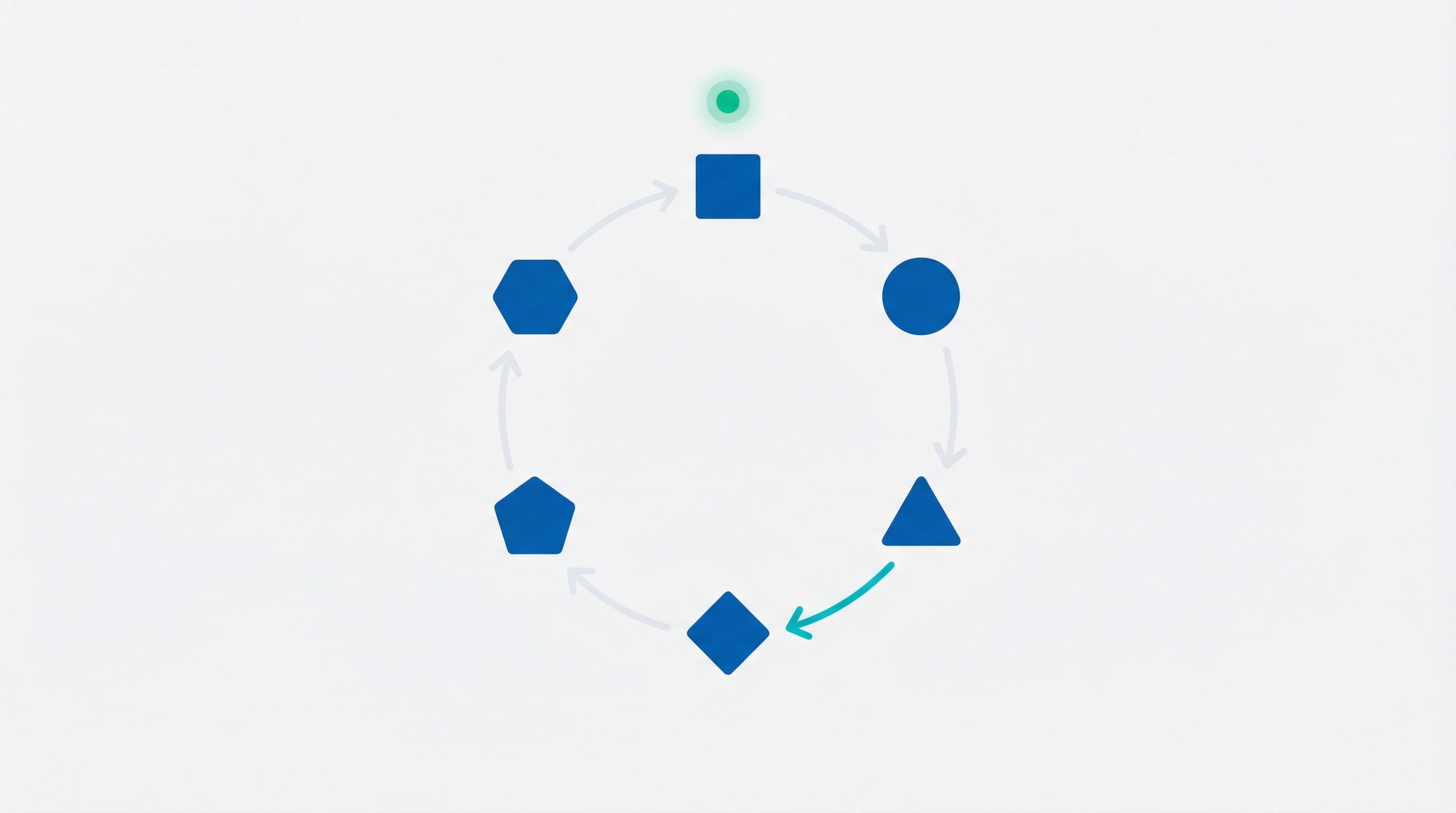
Content gap analysis is not a one-time project. Your competitors publish new content weekly. A gap you fill today creates a new gap for them, and the cycle continues.
Track Your Gap-Fill Performance
Set up tracking for every piece of gap-targeting content at three checkpoints:
- 30 days - Is the page indexed? Are you ranking in the top 50 for target keywords? If not, check technical issues or intent mismatches.
- 60 days - Have you moved into the top 20? Are you earning impressions in Search Console? Look at click-through rates and adjust titles or meta descriptions if impressions are high but clicks are low.
- 90 days - Are you in the top 10? Measure organic traffic, time on page, and conversion actions (signups, demo requests, downloads). This is your ROI checkpoint.
Measure What Matters
Track these metrics for each gap-fill piece:
- Keyword rankings for primary and secondary gap targets
- Organic traffic growth to the specific page
- Engagement signals (scroll depth, time on page, internal link clicks)
- Conversions attributed to the page (signups, demos, purchases)
Build an Ongoing Rhythm
- Weekly - Check for new competitor content using automated alerts or manual spot checks
- Monthly - Review ranking progress for gap targets, identify any new SERP feature changes
- Quarterly - Run a full gap audit (repeat Steps 1-4), refresh your prioritized gap list
Frequently Asked Questions
How often should you do a content gap analysis?
Run a full analysis quarterly. Between audits, monitor competitor publishing weekly using automated tools or Google Alerts. Major algorithm updates or competitor website redesigns should trigger an immediate re-analysis. If you want to automate the monitoring layer, a competitor monitoring tool can track new pages and content changes in real time.
What is the difference between a content gap and a keyword gap?
A keyword gap is one type of content gap, focused specifically on search terms competitors rank for that you do not. Content gaps are broader. They include intent mismatches (you have the wrong content type for the query), format gaps (missing video, templates, or tools), depth gaps (your coverage is thinner than what ranks), and value gaps (you lack original data or first-hand experience). A thorough gap analysis covers all four types. Read more about this in our content gap analysis guide.
Can you do content gap analysis without paid tools?
Yes. Use Google Search Console for your own keyword data, site: search in Google to inventory competitor content, Ahrefs' free webmaster tools for limited keyword analysis, and AnswerThePublic for question-based gaps. Manual analysis takes significantly more time but works well for startups on tight budgets with fewer than three competitors to track. The tradeoff is time versus depth: free tools give you snapshots, while paid tools give you ongoing monitoring.
How do you find content gaps in competitive industries?
In saturated markets, keyword gaps are rare because established players cover most terms. Focus instead on intent gaps (a different angle on the same topic), format gaps (video where everyone else writes articles), and value gaps (original research, case studies, or interactive tools competitors have not created). Differentiation beats duplication. A content gap analysis tool can help surface these non-obvious opportunities by analyzing competitor content changes over time, not just keywords.
How many content gaps should you try to fill at once?
Prioritize 5-10 gaps per quarter based on your scoring framework. Trying to fill every gap dilutes quality and stretches your team thin. One well-researched, original piece that fills a high-priority gap outperforms ten thin articles targeting low-value gaps. Start with your quick wins (high score, low effort), build momentum, and use the results to justify investment in harder gaps.
What metrics show that a content gap strategy is working?
Track keyword rankings for gap targets (aim for top 20 within 90 days), organic traffic growth to gap-fill pages, engagement metrics (time on page, scroll depth), and conversion actions (signups, demo requests). A 40% organic traffic increase is achievable for established sites using systematic, data-driven gap analysis (Source: Undetectable.ai). If you are not seeing movement within 90 days, revisit your intent alignment and content quality before assuming the gap was not worth targeting.
Ready to find the content gaps your competitors are exploiting right now? Try SpyGlow free and get your first gap report in minutes. Start your free trial.
Sources
- Yotpo - Modern Content Gap Analysis - First-hand experience visibility gains, Information Gain insights, E-E-A-T weighting in December 2025 Core Update, customer photo conversion data, Australian meal delivery case study
- Undetectable.ai - Content Gaps - Data-driven gap analysis traffic impact statistics
- Visualping - Competitive Intelligence Sources - Expert insight on monitoring competitor content format shifts
Content Gap Analysis: How to Publish What Will Rank
Most content teams don't have a content problem-they have a prioritization problem. Learn how content gap analysis finds competitor-winning topics and turns them into a plan you can execute.
Competitor MonitoringWhat Is Competitive Intelligence? A Complete Guide for Startups
Learn what competitive intelligence really is, why it matters for startups, and how to build a system that turns competitor data into winning decisions.
Competitor MonitoringBest Competitive Intelligence Tools for Startups in 2026 (and Why Agentic Platforms Win)
A founder's guide to the best competitive intelligence tools in 2026, the three categories that matter, and why agentic AI platforms like SpyGlow change the game.
Ship the response, not just the read.
Free forever for your first two rivals. No credit card. Five minute setup.