
How to Run Win-Loss Analysis With Buyer Interviews
Rep-reported loss reasons are often wrong. Learn how to run win-loss analysis with buyer interviews, match quotes to competitor changes, and turn findings into clear actions.
TL;DR: Rep-reported loss reasons are usually wrong, so interview the buyers yourself. Line up each quote against the competitor change that happened in the same window. Ship every finding as one summary, one reason and one action, written in the buyer's words.
Clozd took 1,000 closed-lost deals and compared the loss reasons in the CRM with what buyers said in first-hand interviews. In Clozd's words, "the information aligned only 15% of the time" (Unkover, citing Clozd).
So about 85% of the reasons your team logged are inaccurate or incomplete. If you're rewriting pitches, pricing or roadmap priorities based on that dropdown, you're building on sand.
This guide walks through a win-loss process built on two inputs: what buyers tell you, and what the competitor changed while those buyers were deciding.
Why win-loss analysis needs buyer interviews, not CRM fields
The loss reason isn't the only broken field. Clozd research found that CRM competitor tags, the field that records who won the deal, "are wrong in roughly 70 percent of cases" (Futureman Labs, citing Clozd).
That second number matters more than it looks. If you don't know who beat you, you can't match the loss to anything that competitor did.
Rep notes give you guesses. Buyer interviews give you reasons.
The payoff comes from consistency. Clozd's 2025 State of Win-Loss report found "63% of companies report win-rate increases from their programs, climbing to 84% for programs running longer than two years" (Elevated Signal). Clozd also reports that "ongoing programs see a positive ROI 85% of the time, compared with 55% for one-off projects" (Clozd).
Treat this as a habit, not a project.
Here's the model the rest of this guide follows:
- Interviews tell you why the buyer chose what they chose.
- Dated competitor changes tell you what shifted around the buyer while they were deciding.
- Together, they tell you what to fix.
Buyer interviews aren't pure ground truth either. Buyers rationalize, forget and soften criticism. That's why you anchor on patterns across many interviews and use competitor changes as corroboration, not proof.
Pick the deals to review
Don't interview every loss. Pick a set you can learn from:
- Recent closed-lost deals, so the buyer still remembers the details.
- A matched set of wins against the same competitor, so you can see what separated the outcomes.
- No-decision deals, which often hide the most uncomfortable truths about your pitch.
- Deals grouped by the competitor the buyer names, not the CRM tag. With the tag wrong roughly 70% of the time, you'll confirm the real winner on the call.
How many interviews you need
Clozd puts saturation at 25 to 30 interviews per segment. That's the point where new themes stop appearing. Clozd also says to "expect 15-30% participation for interviews versus 3-5% for surveys," which is why interviews beat surveys for this work (Clozd).
Plan for lopsided response rates. One Corporate Visions customer reported "response rates of 20 to 25 percent on wins and 10 to 15 percent on losses," and said well-timed outreach pushed participation past 70% (Corporate Visions).
Lost buyers respond less often than winners, so your sample skews toward people who liked you. Reach out within a few weeks of the decision, while the deal is still fresh and the buyer still feels like talking.
Build a competitor timeline before the first call
This is the prep step most win-loss guides skip. For each deal:
- Note the evaluation window, from first meeting to close date.
- Pull every meaningful change the named competitor made inside that window.
- Sort those changes by importance.
Meaningful means a pricing page edit, a new tier, a rewritten homepage headline or a product launch. It doesn't mean a footer copyright year.
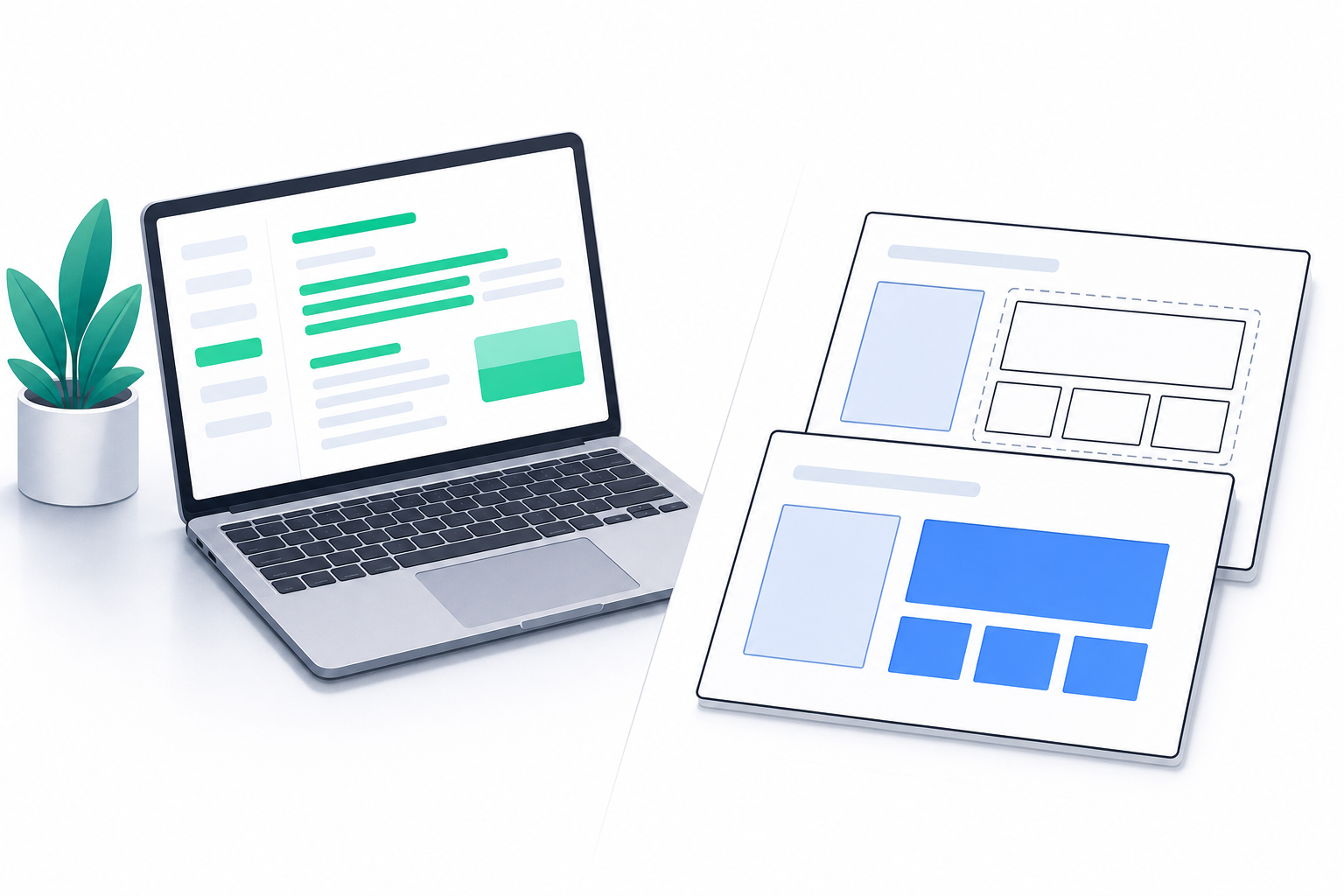
SpyGlow shows old and new wording side by side, with the page and date the change came from, sorted by importance. You can see dated changes side by side for each tracked rival and walk into the interview knowing exactly what the buyer saw.
Write interview questions that get honest answers
Start broad. Let the buyer tell the story in their own order before you narrow anything down. Your first question should be something like "Walk me through how this started."
Then move to a handful of headline questions, each with a follow-up that asks for specifics.
Don't hand the buyer an easy answer
Buyers rarely volunteer the real reason if you offer them a polite one. Price is the most common polite one.
- Leading: "Was price the issue?"
- Open: "What made the final choice feel right?"
The first question gets a yes. The second gets a story.
Add questions anchored to your timeline
Your competitor prep pays off here. Add two or three questions tied to the dated changes you pulled:
- "When did their pricing come up, and what did you see?"
- "Did anything they announced in March change the conversation?"
- "Who on your side first mentioned their new enterprise plan?"
These questions help a buyer remember specifics they'd otherwise blur together.
A sample question set
- Walk me through how this evaluation started.
- Who else did you look at, and how did that list get made?
- What did the shortlist come down to in the last two weeks?
- When did their pricing come up, and what did you see?
- Was there a moment where one option pulled ahead?
- What would have had to be true for you to choose differently?
- If you had to explain the decision to your boss in one sentence, what would you say?
That last question matters most. The buyer's one-sentence answer becomes the "reason" line in your output.
Run the interviews and record findings against the competitor timeline
Decide who runs the calls. In Clozd's 2025 data, teams using third-party interviewers were "more than 2x as likely to be satisfied with feedback quality (70% vs. 34% satisfaction for internal programs)" (Elevated Signal).
If you run it internally, the interviewer should never be the rep who lost the deal. Buyers won't criticize someone to their face.
Record, transcribe and tag quotes verbatim
Keep the buyer's wording intact. Don't paraphrase "their onboarding felt like a science project" into "implementation concerns." The exact words are what your reps will use later.
Tag every quote with three things:
- The theme
- The competitor
- The brand or product line
Transcripts keep paying off after the program ends. At SPS Commerce, a rep revisited an automated win-loss transcript and voice recording, found a competitor strategy that never appeared in public marketing, and shared new insight with the prospect. "Within a week after sharing new insight with the prospect, they formally signed with SPS Commerce" (Corporate Visions).
Pair each quote with the dated change it points to
Build a two-column record for each interview:
| Buyer quote | Competitor change |
|---|---|
| "Their new team plan was cheaper for five seats." | Pricing table edit, dated inside the deal window, old and new wording |
| "They suddenly felt like the enterprise option." | New enterprise tier: shift in positioning |
A changed page gives you trivia. A dated change next to a buyer quote gives you a move.
Query the history when the buyer's memory is vague
Buyers say things like "I think they changed something in spring." That's when you need to search the record, not guess.
AskGlow answers plain-English questions about rival changes, with sources shown for each point. Try a query like "What did [competitor] change on their pricing page between April and June?" You can ask competitor history in plain English and paste the sourced answer straight into the interview record.
Code patterns across wins and losses
Pick a small, fixed set of themes and code every interview against them. For example:
- Pricing
- Product gap
- Messaging and trust
- Implementation
- Rep experience
Count how often each theme shows up across wins and losses, not just losses. A theme that appears in both doesn't explain why you lost.
Separate one-off complaints from patterns
One buyer hating your contract terms is an anecdote. A theme that keeps showing up in losses against one competitor, and lines up with a dated move by that competitor, is a pattern worth acting on.
Don't call it a pattern too early. Clozd's 25 to 30 interviews per segment benchmark is the point where new themes stop appearing (Clozd). Below that, treat findings as hypotheses.
A competitor change that comes right before a loss can be coincidence. Only treat it as a cause if several buyers bring it up independently.
Look for composite signals
The strongest findings come from two or more sources that point the same way. Picture a quarter with all three of these:
- Buyers quote a pricing concern.
- The competitor's pricing table changed.
- The competitor launched a new enterprise tier.
Any one of these alone is a data point. All three in the same window is a competitor moving up-market and taking your mid-market deals on the way.
Filter out noise before you code
Leave out cookie banner tweaks, footer year edits, A/B variant swaps and image compression updates. None of them explain a lost deal, and they bury the changes that do.
SpyGlow strips out cookie banners and widgets, scores every change from 1 to 10, and only alerts when a change is worth the team's time. Your timeline starts clean, so your coding pass does too.
Turn findings into sales cards and roadmap changes
Every finding ships in the same format:
- Summary: what happened. "Lost three mid-market deals to [competitor] in Q2."
- Reason: the buyer's exact sentence. "Their new team plan was cheaper for five seats, and nobody showed us the total cost on yours."
- Action: owner, step and due date. "Sales enablement updates the pricing objection handler by Friday."
Keep all three together. A summary without an action is a report nobody reads. An action without the buyer's reason is a hunch with a deadline.
Update the competitor card first
Unkover says the first quick wins come from updating sales cards with buyer language. It also sets honest expectations: "Measurable win rate improvement: 2-3 quarters of consistent execution," with full integration taking 12 to 18 months (Unkover).
The upside is real when the cards reflect what buyers say. Klue's 2024 Win-Loss Survey found "71% of businesses using battlecards report improved win rates, and among those, 93% say the improvement exceeds 20%" (Arcade, citing Klue).
M33 Growth describes a portfolio company that called 40+ prospects it had lost to its #3 competitor. The team built cards around 7 key areas to steer evaluations toward. "Over several months, we shifted from losing 6 of 10 deals to winning 9 of 10" (M33 Growth). That's one team's result, not a promise, but the method is the same one described here.
Draft the card and track the fix
SpyGlow drafts competitor cards with pricing comparisons, objection handlers and discovery questions from tracked pages. Paste the buyer's exact words into the objection handlers. Your reps will recognize them on the next call.
Then make sure the fix ships. One click on a change creates an action with a pre-filled title, description and source link. The team assigns steps and drags it to Done when it's shipped. You can turn a finding into a tracked action instead of leaving it in a slide deck.
A lightweight workflow for multi-brand teams
Agencies, holding companies and multi-product SaaS teams hit a sample-size problem fast. At 25 to 30 interviews per segment, splitting by brand multiplies the work. This version keeps it manageable:
- Give each brand its own workspace, with its own competitors, cards and alerts.
- Tag every interview with the brand or product line. Pool shared themes like pricing and rep experience, and code only brand-specific items separately.
- Run a monthly coding pass per brand, then one cross-brand review to spot a competitor testing a message on a sister brand first.
- Use the Monday brief as the shared rollup of the week's competitor changes, why they matter and next steps.
- Route each brand's actions to that brand's owner.
FAQ
How many win-loss interviews do I need before the patterns are real?
Clozd puts saturation at 25 to 30 interviews per segment, the point where new themes stop appearing. Below that, treat what you find as a hypothesis to test in the next round of calls. If you track several brands, pool shared themes so you aren't stuck waiting for 30 interviews per brand.
What response rate should I expect from lost buyers?
Plan for less than you'd like. One Corporate Visions customer saw 10 to 15 percent on losses and 20 to 25 percent on wins, with well-timed outreach pushing participation past 70%. Reach out within a few weeks of the decision.
Should I pay buyers for win-loss interviews?
A small gift card is common practice and helps with lost buyers, who have less reason to talk to you. The right amount depends on seniority: a VP's time costs more than a team lead's. Keep the incentive consistent within each segment so it doesn't skew who agrees to talk.
Why not trust the loss reason in the CRM?
Clozd found CRM loss reasons matched buyer interviews only 15% of the time across 1,000 closed-lost deals. The competitor tag is wrong in roughly 70% of cases too. Reps log what they believe happened, and buyers rarely tell them the whole story.
How do I connect a buyer's comment to what a competitor actually changed?
Build a timeline of the competitor's changes inside the deal's evaluation window before the call. Compare old and new wording with the page and date, then pair each buyer quote with the change it points to. When the buyer's memory is vague, AskGlow answers plain-English questions about rival changes with sources shown for each point.
Sources
- Unkover, Win-loss analysis guide
- Clozd, Win-loss analysis guide
- Elevated Signal, citing Clozd State of Win-Loss 2025
- Corporate Visions, The business case for win-loss analysis
- Corporate Visions, Win-loss analysis and SPS Commerce
- Futureman Labs, Sales win-loss analysis
- Arcade, citing Klue 2024 Win-Loss Survey
- M33 Growth, lost-deal case study
Build the timeline for your last lost deal
Pick the most recent deal you lost to a named competitor, write down its evaluation dates, and pull every scored change that competitor made inside that window before you book the buyer interview. Start free with up to two rivals and see the first captured competitor pages after setup, with capture timing depending on the site. When a buyer's quote matches one of those changes, save it as an action with an owner and a due date. You can turn your first finding into a tracked action or compare plans if you track more brands.
One summary. One reason. One action.
Ship the response, not just the read.
Free forever for your first two rivals. No credit card. Five minute setup.