
SpyGlow vs Klue: Enterprise Feature Comparison 2025
Klue leads on CRM integrations and win-loss data. SpyGlow scores public competitor changes across multiple brands. This framework shows which fits your team and how to run a pilot.

TL;DR: Klue goes deeper on governed sales enablement, with Salesforce, HubSpot and Gong integrations plus win-loss data. SpyGlow turns public competitor changes into scored, sourced actions across up to 10 brand domains, at published prices. Pick by owner and job, run a structured pilot, and ask both vendors the security and contract questions in the pilot checklist.
A competitor cuts its mid-tier price on a Tuesday. By Wednesday, three people need three different things. Sales needs a talk track for the deal closing Friday. Product marketing needs to know if the positioning still holds. Product needs to know if the move hints at a roadmap shift.
Which tool gets you there depends on who owns that Wednesday. Klue is a sales enablement system built around CRM, call data and win-loss. SpyGlow is a competitive intelligence platform built around turning public changes into owned actions across several brands. Klue wins on several enterprise requirements. This framework shows where, and ends with a pilot checklist you can run on your own rivals.
Klue and SpyGlow are built for different jobs
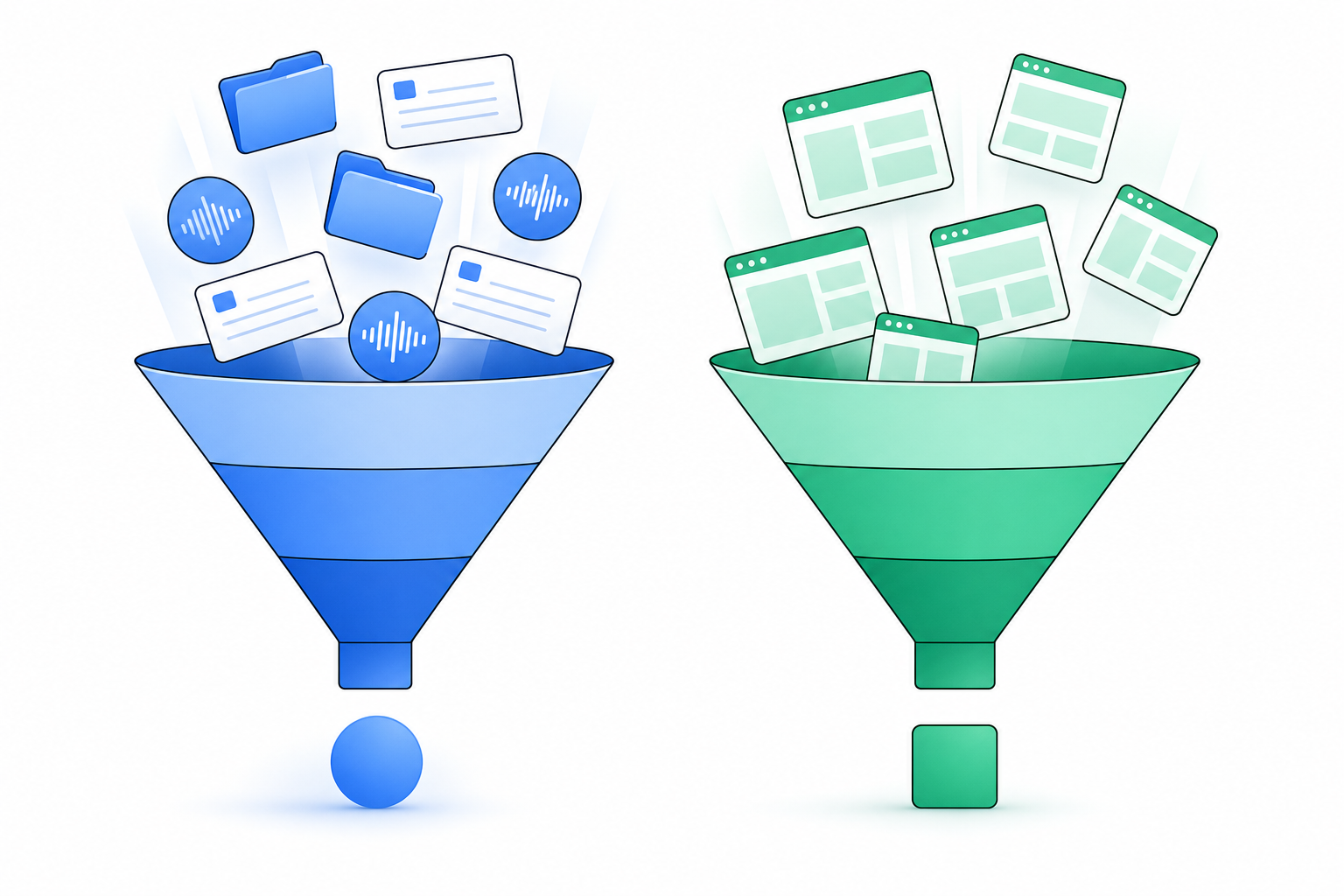
Klue's job is getting competitive context to sellers inside the systems they already work in. Its battlecard page says Klue "integrates with Salesforce, HubSpot, Gong, Chorus, Slack, and Teams" (Klue). Its newer Compete Agent pushes deal-specific competitive context to sellers while deals are live in Salesforce (Improvado).
SpyGlow's job is different. It takes a public competitor change and attaches a reason and an action to it. It checks rivals' public pages, strips out cookie banners and widgets, and scores every change on a 1-to-10 importance scale. You see the old and new wording side by side, with the page and date the change came from (SpyGlow features).
A page diff gives you noise. A scored change with a reason and an owner gives you intelligence.
The bigger difference is where each tool looks. Klue's Auto Insights draws on CRM data, call recordings, win-loss interviews and external sources (Improvado). SpyGlow monitors public competitor pages only, with no private content or passwords (SpyGlow pricing).
That's a scope choice, not a flaw in either product. Klue can tell you what a buyer said about a rival on last week's call. SpyGlow can't, because it never touches your calls. SpyGlow can show you the exact sentence a rival rewrote on its enterprise page last Thursday, with the evidence attached.
Where Klue wins, stated plainly
If you're evaluating for an enterprise sales org, Klue has real advantages. Here they are without spin.
CRM and conversation intelligence depth. Klue lists integrations with Salesforce, HubSpot, Gong, Chorus, Slack and Teams (Klue). A ZoomInfo review describes its Salesforce connection as bi-directional (ZoomInfo Pipeline). SpyGlow's verified integrations are Slack and webhooks, on Pro and above. If your reps never leave Salesforce, that gap matters.
Win-loss and deal outcome data. Auto Insights uses win-loss interviews and call recordings, so Klue can connect a competitor's move to what happens in deals (Improvado). Klue reports a few customer outcomes:
- Fleetio "used Klue AI to automate building sales battlecards that bumped competitive deal win rates by 5%" (Klue).
- Blackbaud saw a 28% win-rate lift, per the ZoomInfo review (ZoomInfo Pipeline).
Treat both as vendor-reported outcomes, not independent benchmarks. Apply the same skepticism to any vendor's numbers, SpyGlow's included.
Governed enablement for large sales orgs. Klue is built around curated, analyst-owned content pushed to reps in deals. Improvado says to "expect 5-10 hours per week of analyst time for teams tracking 10+ competitors" (Improvado). That's an investment, and it pays off when you have a dedicated CI owner whose job is curation.
Here's the plain verdict. If your CI program lives inside Salesforce and Gong and has a dedicated analyst, Klue is built for that team. SpyGlow is a different product for a different team.
One fairness note on SpyGlow. Its homepage positions it for early-stage product teams with no one owning competitor watching. Enterprise controls like SSO, SCIM, audit logs and security certifications were not verified on its public pages. Ask for them in writing. Don't assume.
Worked example: one competitor price cut through each tool
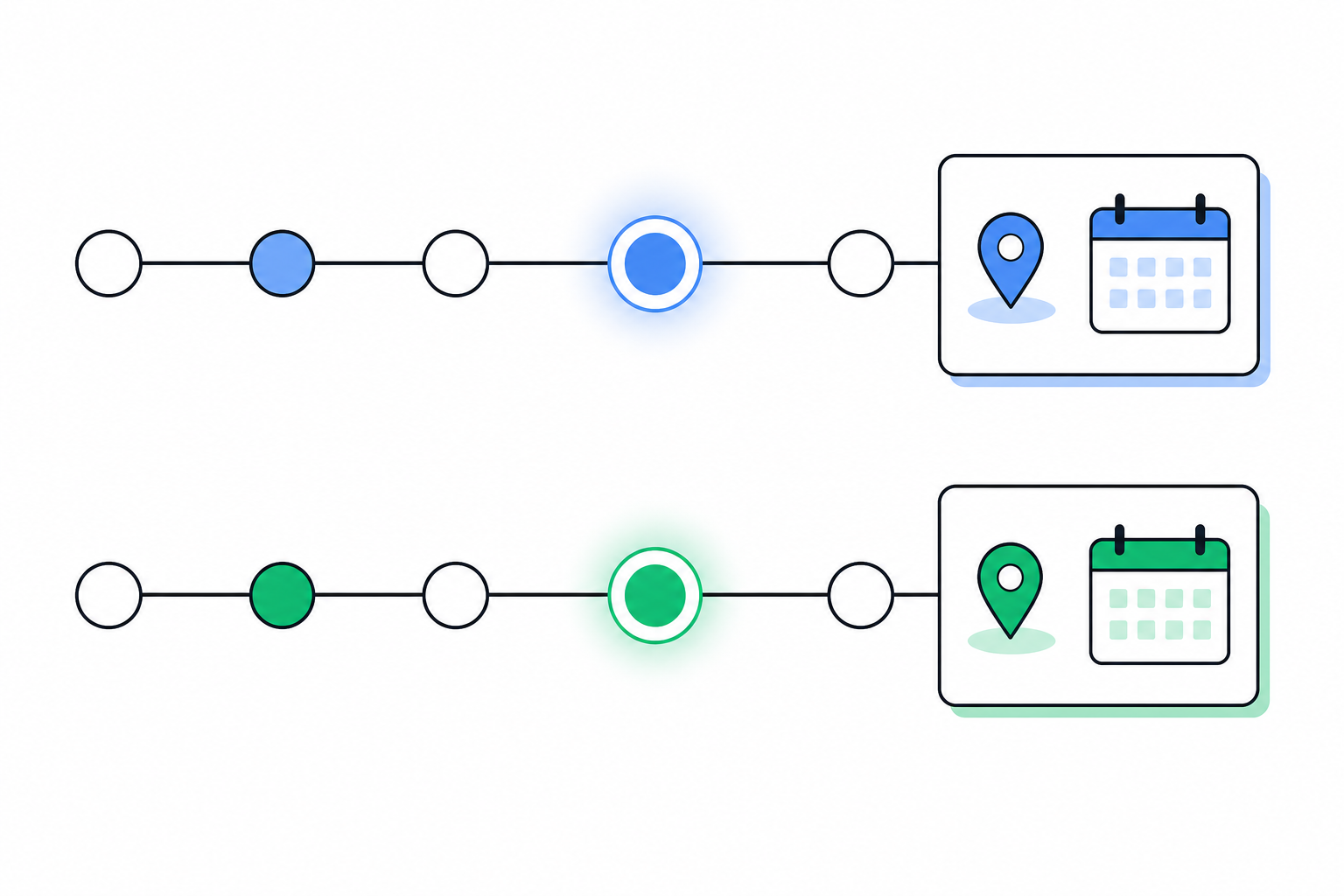
Here's a hypothetical. A rival called Acme cuts its mid-tier price 17% and adds an enterprise tier, both on the same pricing page. Your portfolio has a flagship brand, Northwind, and a sister brand, Beacon. Both compete with Acme.
Two signals come out of that one page: "Pricing dropped 17%, update battle cards today" and "New enterprise tier, shift in positioning."
Through SpyGlow:
- A scheduled check catches the pricing page change. The free plan checks daily, and Teams runs "3-hourly monitoring" (SpyGlow pricing). On Pro and above, you can watch only the pricing table instead of the whole page.
- Banner and footer noise gets stripped. The change is scored and shown with old and new wording, the page and the date.
- A Slack or webhook alert fires, on Pro and above.
- SpyGlow can draft an editable battle card from tracked pages. Test whether the team can update it with a pricing comparison, objection handlers and discovery questions.
- One click creates an action with a pre-filled title, description and source link. You assign an owner, and someone drags it to Done when the new talk track ships (SpyGlow Actions).
- The Monday brief rolls the change up with why it matters and next steps.
- A rep asks AskGlow, "What has Acme changed on pricing this quarter?" and gets an answer with sources shown for each point.
Beacon gets the same treatment in its own workspace, with its own competitors, battle cards and alerts. The Beacon team doesn't have to dig through Northwind's feed.
Through Klue:
- An analyst curates the change into the battlecard.
- Compete Agent surfaces the deal context to sellers working Acme deals in Salesforce.
- Auto Insights can tie the move to call recordings and win-loss data, so you can see whether reps start hearing the new price on calls.
The honest takeaway. Treat speed from change to an owned task as a pilot metric. Compare elapsed time from a detected change to an assigned task in both tools. SpyGlow covers the sister brand without a second setup. Klue is stronger at measuring the deal impact afterward, because it sees CRM and call data that SpyGlow never touches.
Does the 10-domain cap fit an enterprise?
State the limit exactly. SpyGlow's pricing page says "Pro, Growth, and Teams support separate brand workspaces, from 3 domains on Pro to 10 on Teams" (SpyGlow pricing). Teams includes "25 Competitors (shared), 100 pages each - 10 Domains - 3-hourly monitoring."
A domain is a website you own and connect. So the cap counts your brands, not your rivals.
That fits a mid-size company, an agency or a multi-product SaaS running up to 10 brands or product lines. It doesn't fit a conglomerate or holding company with dozens of brands. That buyer outgrows one account, and you should count your brands before you start a pilot.
The cost model is where the two tools split hardest. SpyGlow publishes its prices:
- Free: $0 per month, two competitors, one seat
- Pro: $49 per month billed annually
- Growth: $124 per month billed annually
- Teams: $249 per month, billed annually as $2,988, with three seats included and extra seats at $39 each
Confirm current pricing before you build a budget. SpyGlow's current official standard prices list Pro at $49 per month, Growth at $124 per month and Teams at $249 per month, billed annually. Capterra lists a different starting price of $29 (Capterra). Confirm pricing directly with the vendor.
Klue publishes no pricing. The ZoomInfo review describes annual prepaid contracts with "automatic twelve-month renewal unless the customer provides 90 days' written notice before the renewal date" (ZoomInfo Pipeline). For context, SpyGlow says legacy CI platforms start at $30K per year (SpyGlow pricing). Get a written quote from both vendors.
Seat-based enablement prices the readers. Domain-based CI prices the brands.
Decision matrix for sales, PMM and product owners
The right tool depends on who owns the work. Use this table to check which way each owner leans.
| Owner | Core job | Lean Klue if | Lean SpyGlow if | Deciding question |
|---|---|---|---|---|
| Sales | Win the deal in front of them | Reps live in Salesforce and Gong and need in-deal surfacing | Reps need a battle card refreshed when a rival's page changes, with sourced evidence they can quote | Where does the rep look first: CRM or Slack? |
| PMM | Keep positioning accurate | Positioning depends on win-loss and call insights | PMM runs positioning across several brands, each with its own competitors, battle cards and alerts | Is your input buyer conversations or rival messaging? |
| Product | Spot roadmap moves early | Your product team works inside CRM and reads deal notes | You want change history, AskGlow queries on rival docs and pricing, and actions with owners and due dates | Does product need deal data or change evidence? |
| Agency or multi-brand | Run CI per brand or client | You run one brand with a deep sales org | You need separate brand workspaces, up to 10 domains | How many brands do you run today? |
Klue's sales strengths come from its integration list and Compete Agent (Improvado). SpyGlow's multi-brand row comes from its pricing page (SpyGlow pricing).
There's also a two-tool answer. Some teams could run Klue for sales enablement and SpyGlow for multi-brand change detection and actions. It's an option worth pricing, not a default.
Pilot checklist: what to test before you sign
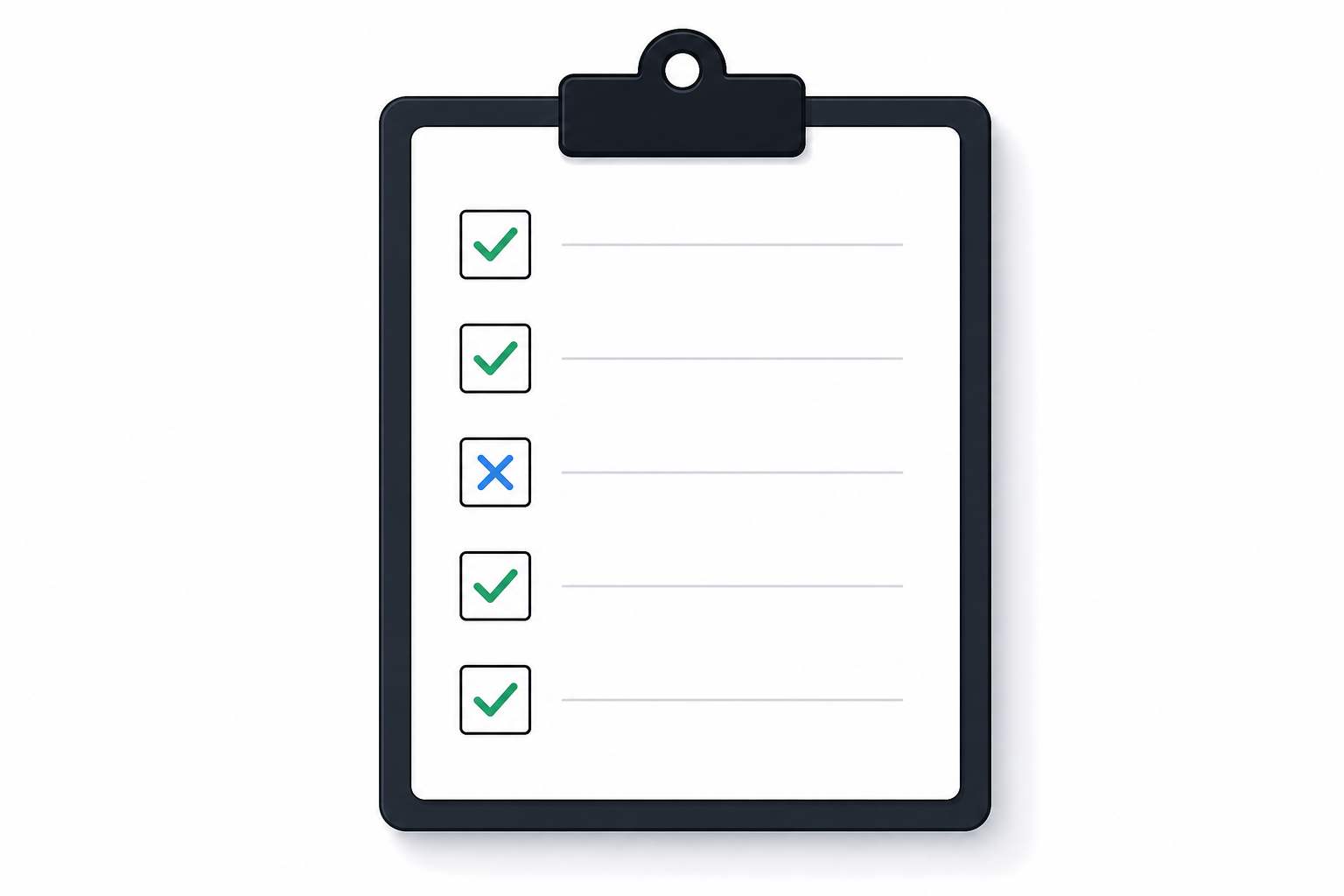
Marketing numbers won't settle this. A two-tool pilot scorecard will. Test these five areas.
Signal quality. Track three to five real competitors for the pilot window. Count alerts you acted on versus alerts you ignored. Then check whether noise reached you:
- Cookie banner copy tweaks
- A/B test variant swaps
- Footer copyright year updates
- Image compression updates
- New tracking pixels
If any of these show up as alerts, your team will start ignoring the feed.
Time from change to action. Measure the hours from a competitor's page change to an updated battle card with an assigned owner. That's the number that predicts whether reps ever see the change. SpyGlow says setup takes five minutes, and the free plan covers two rivals with no credit card.
Integration and OAuth review. List every scope each tool requests in Salesforce, Slack and similar systems. Recent history makes this concrete.
- Klue said: "On June 12, we identified unauthorized activity affecting a portion of Klue's integration infrastructure" (Klue). Attackers got in through a compromised legacy credential and took OAuth tokens.
- Klue revoked customer OAuth credentials and disabled integrations, including Salesforce, HubSpot, Gong, Chorus, Clari, Slack, Zoom, SharePoint and Google Drive (kluebreach.com).
- Salesforce disabled the Klue Battlecards app, saying "organizations will be unable to connect to Salesforce via the app until further notice" (The Hacker News).
- Huntress said copied data included "business contacts, price quotes, and other sales-related data and messaging" (The Hacker News). Recorded Future said "portions of its Salesforce environment were accessed through the compromised OAuth credentials" (kluebreach.com).
- Klue announced that its Salesforce and Gong integrations were reinstated on July 27, 2026 (Klue). Verify the current status and any required reauthorization steps.
The lesson applies to any CRM-connected CI tool: deeper integration widens third-party OAuth risk. Score integration depth and integration risk together. SpyGlow's public-pages-only model shrinks that surface, and it's also the reason SpyGlow lacks Klue's CRM depth.
Identity and governance. Ask both vendors about SSO, SCIM, audit logs and data retention. SpyGlow's SSO and SCIM weren't verified on its public pages, so get answers in writing.
Contract terms. Put Klue's 90-day renewal notice window on your calendar the day you sign. SpyGlow plans can be upgraded or downgraded at any time, with billing prorated automatically.
FAQ
Is SpyGlow a replacement for Klue at an enterprise?
Not for CRM and Gong-centered enablement or win-loss programs. Klue sees deal and call data that SpyGlow never touches. SpyGlow fits multi-brand change-to-action workflows across up to 10 domains, which is a different job.
What does the 10-domain limit count?
It counts your own connected brand websites, not your competitors. On Teams, the plan shares 25 competitors across your domains, with 100 pages each. If you run more than 10 brands, you'd outgrow a single account.
Does Klue publish pricing?
No. The ZoomInfo review describes annual prepaid contracts with automatic twelve-month renewal unless you give 90 days' written notice before the renewal date. Ask for a written quote and the full renewal terms during the pilot.
Were Klue's integrations affected by the June 2026 incident?
Yes. Klue revoked customer OAuth credentials and disabled integrations, and Salesforce disabled the Klue Battlecards app at the time. Klue announced that Salesforce and Gong integrations were reinstated on July 27, 2026. Verify the current status and any required reauthorization steps with Klue.
Can SpyGlow send alerts into Slack?
Yes, Slack and webhook delivery is available on Pro and above. Each change shows old and new wording, the page and date, and a 1-to-10 importance score. The free plan includes alerts but not the Slack and webhook integrations.
Sources
- Klue, best sales battlecard software
- Klue, an update on recent Klue security incident
- Klue, articles
- ZoomInfo Pipeline, Klue review
- Improvado, 32 best competitive intelligence companies
- The Hacker News, Salesforce disables Klue app
- Klue breach tracker
- Capterra, SpyGlow listing
Run the pricing-change test on your own rivals
Pick the one competitor whose pricing page your sales team asks about most. Add it and a second rival on SpyGlow's free plan. When the first scored change lands, turn it into a tracked action with an owner using Actions. Then compare that path, hour by hour, against your current Klue or manual process. If the test needs a second brand domain, check current pricing.
Where Klue, Crayon, Kompyte, Visualping, Competitors.app and Ninja Reports fit, and where SpyGlow does.
How to Set Up Competitor Alerts That Catch Real Moves
Google Alerts and page-change monitors catch edits but miss what matters. Learn how to score competitor changes, filter out noise and route real moves to the right owner.
MarketingNinjaReports for SaaS CI: What It Covers and Misses
NinjaReports covers SEO footprint: traffic, keywords, rankings and ad copy. It misses exact pricing and messaging changes. Here is what a SaaS team needs to close that gap.
Know the day a competitor changes, and what to do about it.
Free for 2 competitors, 3 pages each, checked daily. No credit card.