
Ninja Reports for Startups: Worth It in 2026?
Ninja Reports suits startups that owe recurring SEO or PPC reports. It won't show competitor moves, and NinjaCat is a different, far pricier product built for agencies.

TL;DR: Ninja Reports ($19 to $59 a month, per Capterra) is worth it if you owe someone recurring SEO or PPC reports. It won't tell you what your competitors changed. For that you need competitive intelligence, not more reporting. NinjaCat is a different company that starts around $1,500/month and is built for agencies at scale, not startups.
A seed-stage founder sets up a reporting tool so the Monday numbers land in her inbox on their own. Three weeks in, the report shows cost per click climbing and demo bookings sliding. The report is accurate. It doesn't say why.
Then a prospect forwards a link. The closest rival launched a cheaper tier on a Tuesday, with no announcement and no press release. The founder found out from a lost deal.
That's the honest answer to "is Ninja Reports worth it?" It depends on which problem you're paying to solve.
Ninja Reports, NinjaCat and Reporting Ninja are three different things
Search for any of these names and you'll get the other two mixed in. Sort them out before you buy.
Ninja Reports is an SEO and PPC reporting tool with white-label options, aimed at freelancers, agencies and small businesses. It sends automated email reports and dashboards. Plans run $19 (Webmaster), $29 (Business) and $59 (Agency) per month (Capterra).
NinjaCat has a separate product listing from Ninja Reports. The sources checked do not establish whether their companies are related. Capterra lists a "Basic $1,500 Per Month" plan (Capterra). Improvado says NinjaCat pricing is quoted and unpublished (Improvado).
Whatagraph reports third-party estimates of $1,500 to $3,000 per month (Whatagraph). If you're a five-person startup, NinjaCat isn't really in your price bracket.
Reporting Ninja is the third name. It runs Starter, Small, Medium and Large tiers at $20 / $40 / $70 / $120 per month on annual billing, and "all plans include unlimited dashboards, scheduled reports, and access to all PPC integrations" (Reporting Ninja). It now pitches AI building too: "Build reports in the app or straight from Claude and ChatGPT," plus an MCP connector (Reporting Ninja). The sources we found don't confirm whether it's the same company as Ninja Reports. Check the vendor's own site before you assume.
One more thing to flag. TopSEOTools credits Ninja Reports with competitor analysis (TopSEOTools). We couldn't find that capability described in the user reviews on Capterra or G2. That gap between what a listicle claims and what users describe is the reason this post exists.

Ninja Reports is worth it when you owe someone a report
The clear "yes" cases look like this:
- A two-person growth agency sending white-label monthly SEO reports to five clients.
- A seed-stage founder who sends investors a monthly paid-acquisition snapshot.
- A solo marketer who wants daily PPC spend and ROI in the inbox before standup.
That last one is a real use case. One Capterra UK reviewer gets daily PPC email reports covering ROI and spend across Google and Facebook, and called them "a dream come true" (Capterra UK).
The price fits a startup budget. At $19 to $59 a month, it costs less than an hour of a contractor's time. One caution: confirm the current price with the vendor before you commit.
Now the limits you'll hit:
- One data source per report. A reviewer wrote: "It's not possible to add multiple data sources to one report as well" (Capterra UK). If you want Google Ads and organic search on one page for your board, that's a problem.
- Limited customization. Reviewers on G2 like the automation more than the flexibility.
- A thin, older review base. The Capterra reviews skew older, and G2 has very few. That makes it hard to judge where the product is heading.
The verdict: if your reporting need is "same report, same sources, every week," Ninja Reports is a sensible $19 to $59 spend.
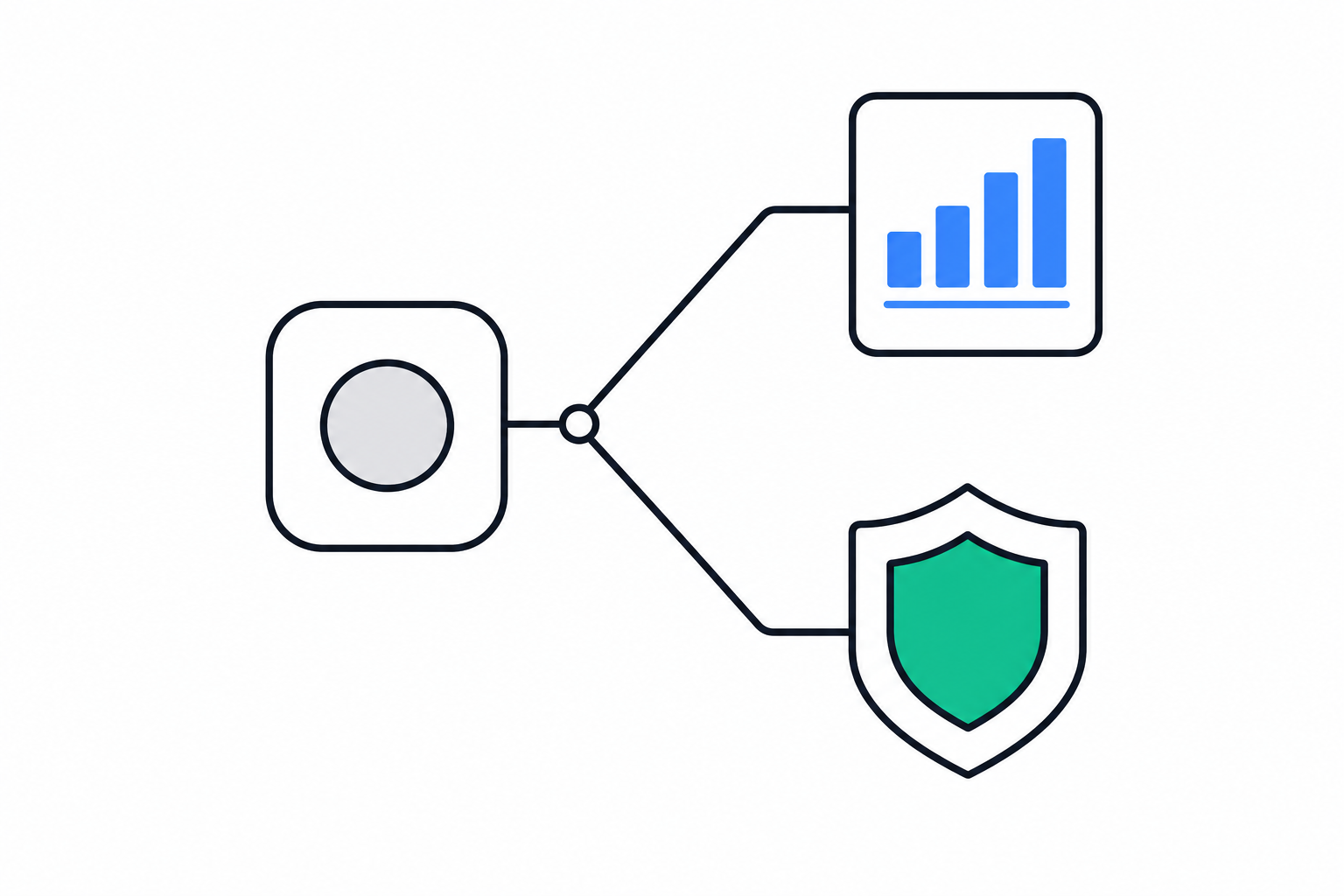
Reporting shows your numbers. It can't show their next move
Reporting tools give you your own metrics. Competitive intelligence gives you their move.
Picture a Ninja Reports dashboard that shows your CPC jumped 30% this week. Useful. But it can't show you that a rival started bidding on your brand terms the same week their new pricing page went live. The report shows the effect. It never shows the cause.
This matters more for startups than it sounds, because most of your deals have a named rival in them. Crayon, which sells CI software, publishes the most-cited numbers here:
- For the average software company, 65% of sales opportunities are competitive (Crayon 2024 State of CI).
- Respondents whose competitive opportunities increased reported a competitive share of 68% (StartUs Insights, citing Crayon 2025). Teams rate their competitive selling preparedness at just 3.8/10.
- Seven in ten teams say at least half their deals are competitive, yet they rate their reps' readiness only 6.3 out of 10 (Crayon 2026 State of CI, summarized).
When a reporting tool does offer "competitor insight," it usually means your rankings next to theirs. That tells you what happened. It doesn't tell you why, or what to do about it.
Here's what intelligence looks like instead:
- "Pricing dropped 17%. Update battle cards today."
- "New enterprise tier. Shift in positioning."
- "API docs rewritten. Developer platform is live."
Each one carries a summary, a reason it matters and an action. Not one without the others.
The opposite failure is also real. Plain change detection pings you about cookie banner copy tweaks, a footer copyright year, an A/B test variant swap or a new tracking pixel. Change detection gives you noise. Intelligence gives you a reason and an action.
You don't need more alerts. You need fewer, scored ones.

When a startup needs competitive intelligence instead
You need CI, not another report, when one of these is true:
- You have five to 10 direct competitors, and nobody owns watching them.
- Your founders or reps lose deals to a named rival and don't know that rival's current pricing.
- You run more than one brand or product line, or you're an agency running CI for clients.
- A rival just made a big move, and you need a response this week, not next quarter.
That first case is who we built SpyGlow for: early-stage product teams with no one owning competitor watching. Our founder, Eclar, shipped v1 in April 2025 as change detection. Users kept showing him the gap between an alert and a decision, so v2, relaunched in January 2026, was rebuilt around intelligence.
Here's how one rival pricing change moves through it:
- SpyGlow checks the rival's public pages, strips out cookie banners and widgets, and scores every change from 1 to 10.
- You see the old and new wording side by side, with the page and date the change came from, sorted by importance. Footer edits don't make the cut.
- It drafts a battle card with a pricing comparison, objection handlers and discovery questions.
- One click turns the change into an action with a pre-filled title, description and source link. You assign an owner and track it to done (Actions).
For history questions, there's AskGlow. Ask "What has Rival X changed on its pricing page since June?" and you get a plain-English answer with sources shown for each point. The free plan includes 10 AskGlow questions a month.
Are battle cards worth the effort? In Crayon's 2021 survey, 71% of businesses maintaining battlecards said the cards helped improve their win rate (Crayon 2021 State of CI). Salsify, a Crayon customer, saw a 22% increase in competitive win rates in its first year of embedding battlecards in sales workflows, per company-reported data (StartUs Insights). Crayon's 2025 survey also found teams that shared CI with sales daily reported 84% higher competitive sales effectiveness (Crayon 2025, via a competitive analysis guide).
A fair caveat: these numbers mostly come from CI vendors surveying firms already invested in CI. Treat them as directional, especially if you don't have a sales team yet.
If you track more than one brand, separate workspaces matter. Each brand gets its own competitors, battle cards and alerts, which suits agencies and multi-product SaaS teams. See features for how change detection and battle cards fit together.
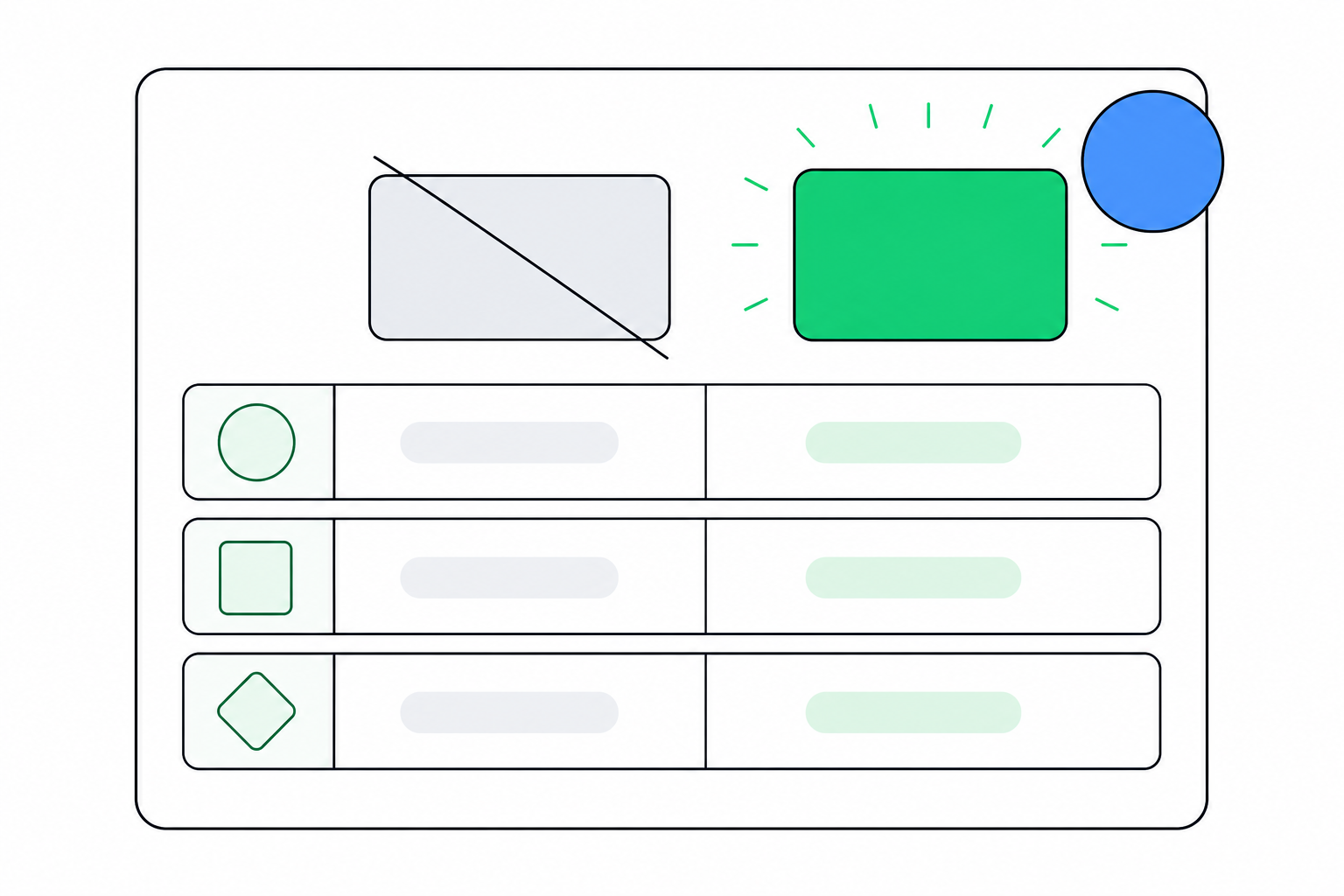
What each option costs, and a five-question checklist
| Tool | What it's for | Starting price | Fits a startup? |
|---|---|---|---|
| Ninja Reports | SEO/PPC client and stakeholder reports | $19 / $29 / $59 per month (Capterra) | Yes, for reporting |
| Reporting Ninja | SEO/PPC reporting | $20 to $120 per month, annual (Reporting Ninja) | Yes, for reporting |
| NinjaCat | Agency-scale marketing reporting | Third-party estimates of $1,500 to $3,000 per month (Whatagraph); pricing is quoted and unpublished (Improvado) | Rarely |
| SpyGlow | Competitive intelligence: change detection, battle cards, AskGlow | Free ($0, 2 competitors, 1 seat) · Pro $49/mo (7 competitors, 3 domains) · Growth $124/mo (20 competitors, 5 domains) · Teams $249/mo (3 seats, +$39/seat) | Yes, for CI |
| Legacy CI platforms | Enterprise CI programs | Start at $30K per year, weeks to roll out | Usually not |
SpyGlow's prices come from our pricing page, where annual billing saves about 17%. The legacy CI figure is our own claim from that page, so weigh it accordingly.
Crayon, whose 2024 State of CI report we cited above, serves analyst-led enterprise programs well. We built a different product for a different team: founders and small product groups running CI themselves.
Run through this before you spend anything:
- Do I owe someone a recurring SEO or PPC report? → Reporting tool.
- Do I need several data sources in one report? → Ninja Reports may frustrate you.
- Have we lost a deal to a rival in the last 90 days without knowing why? → CI.
- Does anyone on the team own watching competitor pricing and positioning pages? If not → CI.
- Do I track more than one brand or client? → CI with separate workspaces.
Pre-revenue with no clients and no sales team? You might not need either yet. Google Analytics, Looker Studio and a manual weekly check of two rival pricing pages can cover the basics for free.
Many startups need both. Ninja Reports Business at $29 plus SpyGlow Free comes to $29 a month. Add SpyGlow Pro at $49 instead and you're at $78 a month for reporting and intelligence together.
FAQ
Is Ninja Reports the same company as NinjaCat?
The products have separate listings, but the sources checked do not establish whether their companies are related. Ninja Reports starts at $19/month for SEO and PPC reporting. NinjaCat is listed on Capterra at $1,500 per month, and Whatagraph reports third-party estimates of $1,500 to $3,000 per month.
Is Reporting Ninja just a rebrand of Ninja Reports?
The sources we found don't confirm it either way. Reporting Ninja prices its tiers at $20 to $120 per month on annual billing and now pitches building reports from Claude and ChatGPT. Check each vendor's own site and price sheet before you assume they're one product.
Can Ninja Reports track what my competitors change?
It isn't built for that. The user reviews describe automated SEO and PPC reporting, not competitor change tracking, even though at least one listicle credits it with competitor analysis. For pricing and positioning changes, use a CI platform with change detection.
What will annoy a startup most about Ninja Reports?
The single-source limit. A Capterra reviewer said you can't add multiple data sources to one report, which hurts if you want paid and organic numbers side by side for investors. Reviewers also mention limited customization.
Do I need a CI platform if I only have a few competitors?
If you have five to 10 direct competitors and nobody watches them, probably yes. Crayon's 2025 data says respondents whose competitive opportunities increased reported a competitive share of 68%. SpyGlow's free plan covers two rivals, so you can test whether the alerts change any decisions before you pay.
Sources
- Capterra: Ninja Reports
- Capterra: Ninja Reports reviews
- Capterra UK: Ninja Reports user reviews
- G2: Ninja Reports reviews
- TopSEOTools: Ninja Reports
- Capterra: NinjaCat
- Improvado vs NinjaCat
- Whatagraph: NinjaCat pricing
- Reporting Ninja: best SEO reporting software
- Reporting Ninja homepage
- Crayon 2024 State of Competitive Intelligence
- Crayon 2021 State of Competitive Intelligence
- StartUs Insights: competitive intelligence companies
- Crayon 2026 State of CI, summarized
- Crayon 2025 survey, via a competitive analysis guide
Watch your two closest rivals before your next report goes out
Keep Ninja Reports for what it does well, which is sending the reports. Then pick the two competitors you lose to most and add them to SpyGlow's free plan: no credit card, about five minutes to set up. The next time one of them edits a pricing table, you'll get the old and new wording side by side, a 1 to 10 importance score and a draft battle card, not just a dip in next week's numbers. See how change detection and battle cards work or compare plans.
See why a competitor outranks you and what to fix first.
Keep reading
SpyGlow vs Klue: Enterprise Feature Comparison 2025
Klue leads on CRM integrations and win-loss data. SpyGlow scores public competitor changes across multiple brands. This framework shows which fits your team and how to run a pilot.
MarketingHow to Set Up Competitor Alerts That Catch Real Moves
Google Alerts and page-change monitors catch edits but miss what matters. Learn how to score competitor changes, filter out noise and route real moves to the right owner.
Know the day a competitor changes, and what to do about it.
Free for 2 competitors, 3 pages each, checked daily. No credit card.